Oil and gas operations are often carried out in some of the most challenging working environments. Drilling sites, pipeline construction zones, remote exploration areas, storage facilities, and maintenance projects may all involve soft soil, mud, sand, wetlands, snow, or uneven terrain.
These conditions can make it difficult for heavy equipment, service vehicles, and workers to move safely around the site. Without proper ground support, vehicles may become stuck, soil may be damaged, and project schedules may be delayed.
Temporary ground mats provide a practical solution. By creating a stable working platform or temporary roadway, these mats allow oil and gas companies to maintain access while reducing ground disturbance and improving jobsite safety.
This article explains why temporary ground mats are particularly suitable for oil and gas fields, where they are commonly used, and what buyers should consider when selecting a mat system.
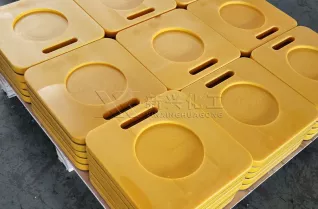
Temporary ground mats are portable panels placed over unstable, sensitive, or uneven ground to create a more reliable surface for vehicles, machinery, equipment, and workers.
Depending on the application, ground mats may be manufactured from:
High-density polyethylene
Composite materials
Timber
Reinforced plastic
Rubber-based materials
Steel or aluminum
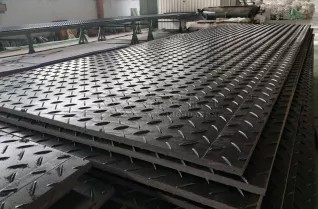
Modern composite and HDPE ground mats are widely used because they are relatively lightweight, corrosion-resistant, reusable, and easy to install.
Once connected together, the mats can form:
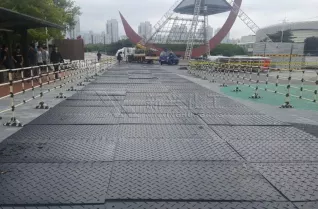
Temporary access roads
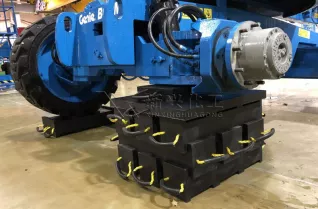
Equipment working platforms
Pedestrian walkways
Rig access routes
Crane support areas
Pipeline construction paths
Staging and storage zones
For oil and gas projects, these temporary surfaces help keep operations moving even when the natural ground is unsuitable for direct traffic.
Oil and gas fields are not always located near developed roads. Many projects take place in remote areas where access conditions are poor.
Rain, snowmelt, vehicle traffic, and excavation activities can quickly turn exposed soil into deep mud. Heavy trucks and drilling equipment may sink into the ground, lose traction, or damage the surrounding terrain.
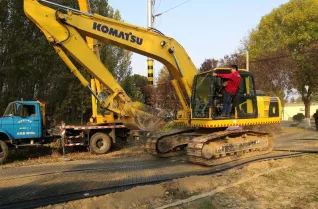
Temporary ground mats distribute vehicle loads across a wider area. This helps reduce rutting and creates a more stable route for:
Tanker trucks
Drilling support vehicles
Mobile cranes
Excavators
Pipeline transport vehicles
Maintenance trucks
Emergency response vehicles
Instead of constructing a permanent road, operators can install a temporary mat roadway only where it is needed. After the project or maintenance activity is completed, the mats can be removed and reused at another site.
This flexibility is especially valuable for exploration projects and short-term field operations.
Recovering a stuck vehicle on an oil or gas site can be expensive and disruptive. It may require towing equipment, additional personnel, and temporary suspension of nearby operations.
A stuck vehicle can also create safety hazards, particularly when the vehicle is carrying fuel, chemicals, pipes, or heavy machinery.
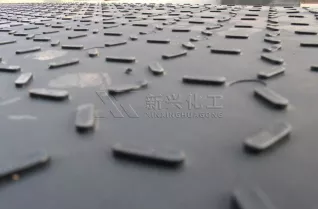
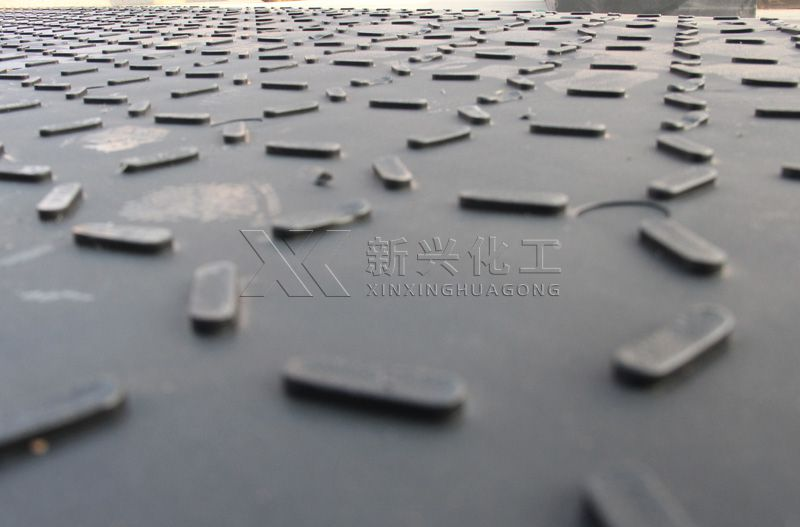
Temporary roadway mats improve traction and provide a more consistent driving surface. Many mats include textured or anti-slip surfaces that help vehicle tires maintain grip in wet and muddy conditions.
By reducing the likelihood of vehicles becoming immobilized, ground mats can help companies:
Avoid costly recovery operations
Reduce equipment downtime
Maintain delivery schedules
Improve emergency access
Lower the risk of vehicle damage
For sites with frequent truck traffic, installing temporary ground protection can be more economical than repeatedly repairing damaged access routes.
Oil and gas companies often operate in environmentally sensitive areas, including grasslands, farmland, forests, wetlands, and coastal regions.
Repeated movement from heavy equipment can compact soil, destroy vegetation, create deep ruts, and disturb drainage patterns. These impacts may increase restoration costs and create difficulties during environmental inspections.
Temporary ground protection mats form a barrier between machinery and the underlying surface. They spread loads and reduce direct contact between vehicle tires and the soil.
This can help minimize:
Soil compaction
Surface erosion
Vegetation damage
Deep rut formation
Mixing of contaminated and clean soil
Damage to underground drainage systems
Although ground mats do not eliminate every environmental impact, they can significantly reduce surface disturbance when properly selected and installed.
For contractors working under strict site restoration requirements, this can make final cleanup easier and more predictable.
Building a conventional access road may require excavation, grading, stone delivery, compaction, drainage preparation, and later removal or restoration.
These activities consume time, labor, fuel, and construction materials.
Temporary ground mats can usually be installed much faster. Depending on the mat size, weight, connection system, and site conditions, installation may be completed manually or with the assistance of standard lifting equipment.
A typical installation process includes:
Inspecting and preparing the ground
Positioning the first row of mats
Connecting adjacent panels
Extending the roadway or work platform
Inspecting the surface before use
Because the mats are modular, operators can expand, shorten, or redirect the access route as site conditions change.
This rapid deployment is particularly useful during emergency repairs, pipeline inspections, shutdown maintenance, and temporary drilling operations.
Uneven and muddy surfaces increase the risk of slips, trips, vehicle instability, and uncontrolled equipment movement.
Temporary ground mats provide a more level and predictable working surface. Anti-slip tread patterns may improve traction for both workers and vehicles.
A stable mat system can support safer activities such as:
Loading and unloading materials
Moving drilling tools
Positioning service vehicles
Walking between work areas
Operating mobile equipment
Conducting inspection and maintenance work
Ground mats can also be used to define designated traffic routes. Separating vehicle access paths from pedestrian walkways may improve overall site organization and reduce interaction between workers and moving equipment.
However, safety performance depends on proper installation. Mats should be securely connected, regularly inspected, and used within their rated load capacity.
Oil and gas fields often require heavy machinery, including cranes, drilling equipment, pipe handling systems, excavators, compressors, and transport trucks.
Natural ground conditions may not provide sufficient bearing capacity for this equipment.
Heavy-duty temporary ground mats help distribute concentrated loads. When properly engineered, they can create stable work platforms for equipment positioning and movement.
Before selecting a mat, buyers should evaluate:
Vehicle weight
Axle load
Tire or track configuration
Ground bearing capacity
Frequency of traffic
Turning and braking forces
Expected weather conditions
Duration of the project
It is important to distinguish between access mats and engineered crane support mats. A mat suitable for truck traffic may not be suitable for crane outriggers or extreme point loads.
For high-load applications, buyers should request technical data and consult the supplier about the intended operating conditions.
Oil and gas operations may continue during rain, snow, freezing temperatures, and extreme heat.
Unprotected access routes can deteriorate rapidly under changing weather conditions. Dry soil may become mud after heavy rain, while frozen ground may soften during warmer periods.
Composite and HDPE temporary ground mats are designed for repeated outdoor use. Depending on the product specification, they may offer resistance to:
Moisture
Rot
Corrosion
Chemicals
UV exposure
Temperature changes
Oil and fuel contamination
Compared with untreated timber mats, plastic or composite mats do not absorb large amounts of water and are less likely to rot.
The correct material should still be selected based on the actual site environment. Oil resistance, temperature range, surface texture, and chemical compatibility should all be confirmed before purchase.
Temporary ground mats are not single-use construction materials. With proper handling, cleaning, transportation, and storage, they can be reused across multiple projects.
This makes them suitable for:
Oilfield service companies
Pipeline contractors
Drilling contractors
Equipment rental businesses
Maintenance teams
Emergency response operators
The initial purchase cost may be higher than using gravel for one short access route. However, reusable mats can offer long-term savings when they are deployed regularly.
Potential cost savings include:
Reduced road construction materials
Lower soil restoration expenses
Less vehicle recovery
Reduced equipment downtime
Faster site setup
Lower disposal costs
Reuse across multiple locations
When comparing costs, buyers should consider the total life-cycle value rather than only the price per mat.
After drilling, pipeline construction, or maintenance work is complete, temporary infrastructure must often be removed.
Gravel access roads may require excavation, hauling, and disposal. In comparison, temporary mats can be disconnected, lifted, cleaned, and transported to the next site.
Because the mats reduce rutting and soil compaction, the underlying ground may require less restoration.
This can help contractors complete site closure more efficiently and meet landowner or regulatory requirements.
The effectiveness of restoration will depend on ground conditions, duration of use, equipment loads, drainage, and the quality of mat installation.
Temporary ground mats can support many activities throughout the oil and gas industry.
Ground mats create access routes for drilling equipment, supply trucks, service vehicles, and personnel.
Pipeline projects may extend across farmland, forests, wetlands, and undeveloped areas. Temporary mats help create linear access roads while reducing surface damage.
Maintenance teams may require temporary access to wellheads located away from permanent roads.
Mats can create stable platforms for storing tools, pipes, pumps, generators, tanks, and other equipment.
During tank installation, inspection, or repair, temporary surfaces can support cranes, service vehicles, and workers.
Rapidly deployed mats can provide access for containment, cleanup, and recovery equipment.
Ground mats may be used around processing facilities where temporary work areas are required during shutdowns or construction projects.
Both temporary mats and gravel roads can improve access, but they are suited to different project conditions.
| Comparison Factor | Temporary Ground Mats | Gravel Access Roads |
|---|---|---|
| Installation speed | Fast | Usually slower |
| Removal | Easy to remove and reuse | Requires excavation and hauling |
| Ground disturbance | Relatively low | Often higher |
| Reusability | High | Limited |
| Route flexibility | Easy to modify | Difficult after construction |
| Wetland suitability | Often more suitable | May require extensive preparation |
| Initial cost | Can be higher | Can be lower for simple projects |
| Long-term value | Strong for repeated use | Depends on material and removal costs |
For permanent or long-term access, gravel may still be appropriate. For temporary projects, sensitive terrain, and changing work zones, ground mats often provide greater flexibility.
Choosing the correct mat system requires more than comparing dimensions and prices.
Confirm that the mat can support the expected vehicles and equipment. Ask whether the stated capacity is based on static load, moving load, or ground-supported testing.
HDPE and composite mats are lightweight and corrosion-resistant. Timber mats may provide greater thickness for some heavy-duty applications, while steel mats may be used in specialized environments.
Look for a tread pattern suitable for mud, rain, snow, and oily conditions.
A secure connection system prevents panels from separating or shifting during traffic. Check whether connectors require special tools.
Lighter mats may reduce transportation and installation costs. Heavier mats may require mechanical handling but can be suitable for demanding applications.
Soft clay, sand, peat, wetlands, and rocky surfaces require different installation approaches. A geotextile layer may be recommended beneath the mats in some conditions.
Oilfields may expose mats to fuel, lubricants, drilling fluids, saltwater, and industrial chemicals. Confirm material compatibility with the supplier.
Mats used in desert, Arctic, or high-temperature locations should be rated for the expected temperature range.
Select mats that can be cleaned efficiently before being transported to another site. This is particularly important when controlling soil transfer or contamination between locations.
Even high-quality temporary ground mats can fail if they are installed incorrectly.
Before installation, inspect the route for major holes, sharp rocks, hidden obstacles, and drainage problems. Remove debris where practical and level severe surface irregularities.
Mats should be connected according to the manufacturer’s instructions. The installation team should check that all connectors are secure and that mat edges do not create trip hazards.
During use, inspect the route regularly for:
Loose connections
Cracked or damaged mats
Excessive sinking
Surface contamination
Uneven transitions
Water accumulation
Mat movement at turning points
Vehicle speeds should be controlled, especially on curves and uneven ground. Sudden braking, sharp turning, and excessive speed can increase stress on the mat system.
After the project, mats should be cleaned, inspected, and stored properly before the next use.
Heavy-duty mats can support many types of oilfield vehicles, but suitability depends on vehicle weight, axle load, ground conditions, and mat design. Buyers should provide detailed application information to the supplier.
Yes, temporary access mats are commonly used in wetland and marsh environments. However, the project may still require environmental approval and an appropriate installation design.
Many composite and HDPE mats offer good resistance to oil, fuel, and industrial fluids. Chemical resistance should be confirmed for the specific mat material.
Service life depends on material quality, traffic volume, equipment loads, handling practices, UV exposure, and maintenance. Reusable mats can support multiple projects when properly managed.
Some manufacturers offer customized mat dimensions, colors, surface patterns, connection systems, logos, and load specifications for large-volume orders.
Temporary ground mats are ideal for oil and gas fields because they provide fast, flexible, and reusable access across difficult terrain.
They help stabilize soft ground, reduce vehicle recovery risks, protect sensitive surfaces, improve jobsite safety, and simplify site restoration. From drilling sites and pipeline projects to maintenance operations and emergency response, temporary mats can support a wide range of oil and gas applications.
For procurement teams, selecting the right ground mat requires careful consideration of equipment loads, soil conditions, chemical exposure, weather, installation methods, and project duration.
A properly selected temporary ground protection system can reduce operational disruption, lower long-term access costs, and help oil and gas contractors complete projects more efficiently in challenging environments.

Established in 1989,located in Qingdao city of Shandong province, Shandong Ningjin Xinxing Chemical Co.,LTD. is the most professional manufacture of engineering plastics and the only manufacturer who has complete MATS system in China.
Phone
+86 189 0640 6469
Location
Liaohe Road, Ningjin Industrial Zone, Dezhou City, Shandong Province, China.
Copyright © Shandong Ningjin Xinxing Chemical Co., Ltd. All Rights Reserved |
Sitemap
| Powered by