Sustainability in construction is no longer limited to using recycled materials or improving building energy efficiency. It also involves reducing the environmental impact of temporary site operations, including equipment access, material transportation, ground preparation, and site restoration.
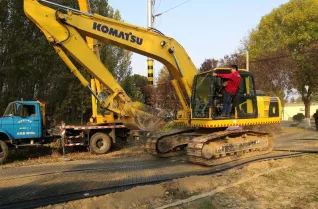
Construction projects often require heavy machinery, delivery trucks, cranes, and workers to move across soft soil, grass, wetlands, landscaped areas, or undeveloped land. Without adequate ground protection, repeated traffic can cause deep rutting, soil compaction, erosion, vegetation damage, and drainage problems.
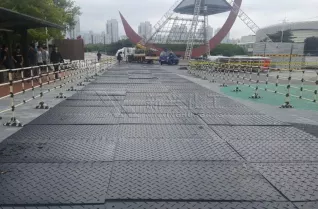
Temporary ground mats offer a practical way to improve construction site access while reducing unnecessary damage to the underlying surface. They create reusable temporary roads, work platforms, and pedestrian routes without requiring extensive excavation or permanent road construction.
For contractors, developers, rental companies, and project owners, temporary ground protection can support both operational efficiency and environmental responsibility.
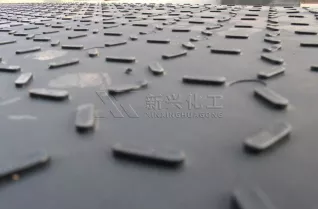
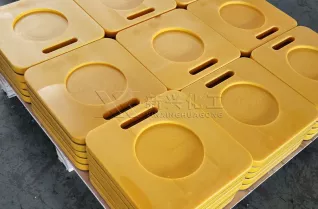
Temporary ground mats are portable panels installed over soft, unstable, or sensitive terrain to create a stable surface for vehicles, machinery, workers, and stored materials.
They can be used to build:
Temporary construction access roads
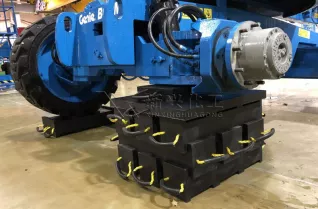
Crane and equipment platforms
Pedestrian walkways
Material staging areas
Site compounds
Parking areas
Utility installation routes
Landscaping access paths
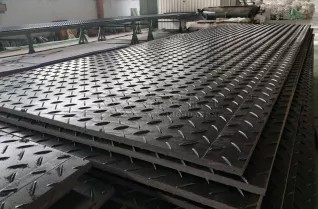
Temporary mats may be manufactured from timber, steel, rubber, aluminum, recycled plastic, high-density polyethylene, or reinforced composite materials.
HDPE and composite ground mats are increasingly used on construction sites because they are reusable, moisture-resistant, relatively lightweight, and easy to transport between projects.
Construction activities can affect the ground long before the permanent building structure is completed.
Heavy vehicles may compact soil, reducing its ability to absorb water and support plant growth. Tires and tracks can also disturb topsoil, create drainage channels, and carry mud onto public roads.
If these impacts are not controlled, the contractor may need to spend additional time and resources on:
Regrading damaged surfaces
Replacing topsoil
Repairing landscaping
Removing contaminated gravel
Restoring drainage systems
Cleaning surrounding roads
Replanting damaged vegetation
Temporary ground mats help prevent some of this damage at the source. By distributing loads over a wider area, they reduce direct pressure on the underlying terrain and create a defined route for site traffic.
This preventative approach is often more sustainable than repairing severe ground damage after construction is complete.
Soil compaction is one of the most common environmental impacts associated with construction traffic.
When heavy vehicles repeatedly travel over unprotected ground, the weight compresses the soil particles. Compacted soil contains less air space and allows less water to infiltrate.
This may lead to:
Poor drainage
Increased surface runoff
Reduced plant growth
Soil erosion
Water pooling
Long-term landscape damage
Temporary construction mats distribute wheel and track loads across a larger surface area. This reduces concentrated pressure and helps preserve the natural structure of the soil.
Ground mats are especially useful in areas that will later be used for landscaping, agriculture, parks, gardens, or recreational spaces.
Many construction projects take place near established lawns, trees, gardens, sports fields, campuses, residential properties, or public spaces.
Creating a conventional gravel access road may require removing vegetation and excavating the surface. Even after the gravel is removed, the area may require extensive restoration.
Temporary ground mats can often be installed directly over grass or other surfaces with limited preparation. They create a protective barrier between the construction traffic and the ground.
This can help reduce:
Grass damage
Root-zone disturbance
Mud formation
Surface contamination
Deep tire marks
Unnecessary vegetation removal
For short-term renovation, utility, event construction, and maintenance projects, removable access mats can be significantly less disruptive than building a permanent or semi-permanent road.
Traditional temporary access roads are commonly built with crushed stone, gravel, timber, or other bulk materials.
These materials may need to be transported to the site, spread, compacted, and later removed. In some cases, the recovered material cannot be reused because it has become mixed with mud or contaminated soil.
Temporary ground mats can be reused across many construction projects. After use, they can be cleaned, inspected, stacked, and transported to another site.
This reduces the need to purchase and dispose of new access-road materials for every project.
For construction companies managing multiple sites, reusable mats may contribute to lower material consumption and more efficient resource management.
A central principle of sustainable construction is keeping materials in use for as long as possible.
Temporary ground mats support this goal because they are designed for repeated installation and removal. High-quality composite or HDPE mats can be deployed on multiple jobs when handled and maintained correctly.
Some plastic ground mats may also contain recycled material or be recyclable at the end of their service life, depending on their composition and the available recycling process.
This creates a more circular product lifecycle than temporary materials that are discarded after one project.
When evaluating sustainability, buyers should consider:
Expected service life
Number of potential reuse cycles
Repairability
Recycled material content
End-of-life recyclability
Cleaning requirements
Transportation efficiency
A mat with a higher purchase price may provide better long-term environmental and economic value if it can be reused across many projects.
Unprotected construction traffic may remove vegetation and loosen topsoil. During rainfall, disturbed soil can be washed into drains, waterways, or surrounding properties.
This creates sediment control problems and may increase the contractor’s environmental management responsibilities.
Temporary mats help keep the ground covered and reduce the direct disturbance caused by vehicle tires and equipment tracks.
They can also help define traffic routes, preventing machinery from travelling across larger areas than necessary.
However, ground mats should be integrated with the site’s wider erosion and sediment control plan. Drainage paths should not be blocked, and water should not be allowed to accumulate beneath or around the mat system.
In some applications, geotextile fabric may be installed below the mats to improve separation and protect the ground.
Restoring damaged ground after construction can require significant amounts of labor, fuel, machinery, soil, seed, and landscaping materials.
When temporary ground mats are used correctly, they can reduce the extent of the damage and simplify final site restoration.
After the mats are removed, the contractor may need only limited surface treatment rather than complete reconstruction of the affected area.
Potential benefits include:
Less soil replacement
Less grading work
Reduced landscaping expenses
Faster site handover
Lower waste generation
Fewer complaints from landowners
Reduced damage to public or private property
For projects with strict reinstatement requirements, the reduced restoration burden can be a major advantage.
Sustainability and productivity are closely connected.
A construction site that experiences frequent vehicle delays, stuck equipment, damaged access roads, or repeated surface repairs consumes additional fuel, labor, and materials.
Temporary ground mats create more reliable access in mud, sand, soft soil, snow, and uneven terrain. This helps trucks and machinery move efficiently around the site.
Improved access can reduce:
Vehicle recovery operations
Equipment idling
Delivery delays
Unplanned road repairs
Fuel consumption
Material handling time
Weather-related disruption
By maintaining a stable route, temporary mats can help contractors avoid waste caused by inefficient site logistics.
Construction and infrastructure projects sometimes need temporary access through wetlands, woodland areas, farmland, coastal zones, or environmentally controlled land.
Permanent access roads may be unsuitable because they require extensive ground preparation and leave a long-term physical impact.
Temporary ground mats allow contractors to create removable access routes while limiting direct contact with the ground.
Typical applications include:
Pipeline construction
Renewable energy installation
Transmission line projects
Bridge maintenance
Utility repair
Environmental remediation
Drainage construction
Civil engineering projects
Although temporary mats can reduce surface disturbance, they do not replace environmental assessments, permits, or site-specific protection measures.
The mat system should be selected and installed according to the sensitivity of the terrain and the applicable project requirements.
Mud tracking is a common problem on construction sites. Trucks leaving an unprotected work area may carry soil onto public roads, creating safety risks and additional cleaning work.
Temporary access mats provide a cleaner, more defined driving surface. This can reduce the amount of mud attached to tires and help control the movement of soil around the site.
Mats may also be used to separate vehicles and equipment from potentially contaminated ground during remediation or industrial construction projects.
When contamination control is important, buyers should select mats that are easy to wash and disinfect.
Cleaning procedures should be planned carefully to avoid transferring contaminated soil, invasive plant seeds, or other material between different sites.
A sustainable construction site should also be safe for workers and equipment operators.
Soft, muddy, or uneven ground increases the risk of:
Slips and trips
Vehicle skidding
Equipment instability
Load movement
Pedestrian accidents
Vehicles becoming stuck
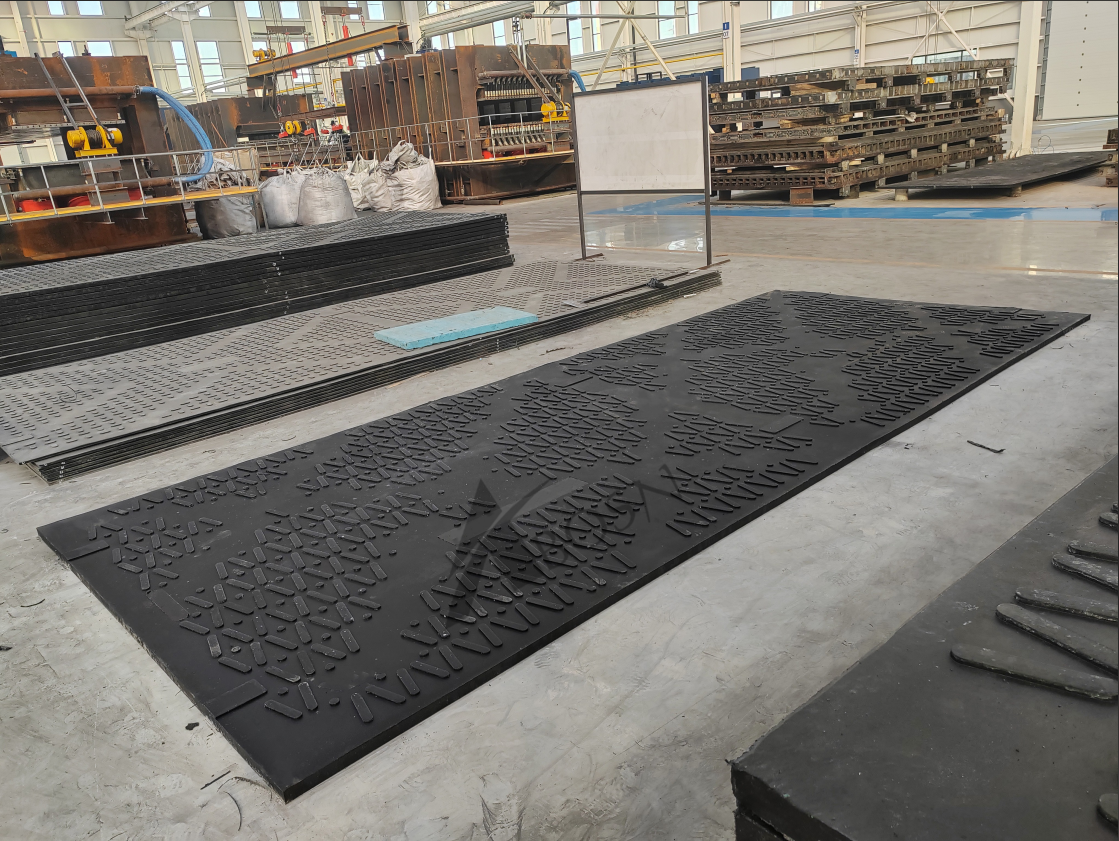
Temporary mats provide a more predictable surface for traffic and work activities. Many ground protection mats include anti-slip tread patterns to improve traction in wet conditions.
They can also be used to create clearly defined vehicle lanes and pedestrian walkways, improving site organization.
Proper installation remains essential. Mats should be connected securely, inspected regularly, and replaced if they become damaged.
Both temporary mats and gravel roads can provide construction access, but their environmental impact and suitability differ.
| Factor | Temporary Ground Mats | Gravel Access Roads |
|---|---|---|
| Ground excavation | Usually limited | Often required |
| Installation speed | Fast | Slower |
| Reusability | High | Limited |
| Removal process | Mats can be lifted and reused | Gravel must be excavated and hauled |
| Waste generation | Relatively low | Can be significant |
| Surface protection | Good when correctly installed | Ground is usually disturbed |
| Route modification | Easy | More difficult |
| Long-term use | Suitable for temporary access | May be better for long-duration access |
| Initial investment | Often higher | May be lower for a single route |
| Lifecycle value | Strong for repeated use | Depends on removal and material costs |
The most sustainable option depends on the project duration, terrain, traffic level, environmental sensitivity, and future reuse potential.
Temporary ground mats can support many types of construction projects.
Mats can create access routes for concrete trucks, cranes, excavators, and delivery vehicles around commercial or residential building sites.
Electricity, water, gas, and telecommunications contractors can use temporary mats to reach installation and repair areas without constructing permanent roads.
Solar farms and wind farms often require access across farmland, grassland, or undeveloped terrain. Mats can protect the surface during equipment delivery and installation.
Pipeline projects require long temporary access routes for excavators, pipe transport vehicles, welding equipment, and inspection teams.
Ground mats allow machinery to enter gardens, parks, sports fields, and landscaped commercial areas while reducing damage to grass and soil.
Temporary mats can support equipment staging, material storage, and access around existing infrastructure.
Large events, exhibitions, and temporary buildings may require machinery to cross lawns or public areas. Ground protection mats provide removable access while helping preserve the venue.
Selecting the right mat requires a balance between performance, durability, transport efficiency, and environmental impact.
HDPE and composite mats are resistant to moisture, corrosion, and rot. Timber mats may be suitable for very heavy equipment but can absorb water and require more transport capacity.
The most suitable material depends on the application, load requirements, site conditions, and reuse plan.
Buyers should provide the supplier with information about:
Maximum vehicle weight
Axle loads
Tire or track type
Frequency of traffic
Ground conditions
Turning movements
Static equipment loads
Project duration
A mat designed for light utility vehicles may not be suitable for cranes or fully loaded construction trucks.
Lightweight mats may be installed manually or with smaller equipment, reducing installation time and fuel use.
However, heavier mats may provide additional stability for demanding environments. The transportation weight of the full mat quantity should also be considered.
An effective connector system helps prevent mats from separating, overlapping, or moving under traffic.
Buyers should check how quickly the mats can be connected and whether special tools or machinery are required.
The mat surface should provide adequate traction for the expected vehicles and weather conditions.
Some mats have different tread patterns on each side, allowing one side to support vehicles and the other to provide a smoother pedestrian surface.
The longer a mat remains usable, the lower its environmental impact may be on a per-project basis.
Buyers should ask about:
Material durability
UV resistance
Temperature range
Chemical resistance
Warranty
Repair options
Storage requirements
Where sustainability is a major procurement priority, buyers can ask whether the mats contain recycled materials and whether they can be recycled after use.
These claims should be supported by clear product information rather than general environmental statements.
The environmental benefits of temporary ground mats depend on how they are managed throughout their service life.
Before installation, survey the route and avoid sensitive areas where possible. Use the shortest practical route to minimize the quantity of mats and the total surface area affected.
Prepare the ground only as much as necessary. Excessive grading or vegetation removal may reduce the environmental benefit of using mats.
During the project, regularly inspect the mat system for movement, sinking, broken connectors, or drainage problems.
Vehicles should follow the designated route and comply with site speed limits. Sharp turning and sudden braking can damage mats and disturb the underlying ground.
After use, clean the mats using an appropriate method, inspect them for damage, and store them in a way that prevents warping or deterioration.
Good mat management increases the number of times each panel can be reused.
Temporary ground mats can reduce soil disturbance, vegetation damage, material waste, and restoration requirements. Their overall environmental benefit depends on the material, service life, transport distance, reuse frequency, and end-of-life management.
Yes. Many ground protection mats are designed for use over grass, lawns, sports fields, and landscaped areas. The allowable duration and vehicle load should be evaluated to avoid long-term damage.
No ground protection system can guarantee that all compaction will be prevented. However, mats distribute loads and can significantly reduce concentrated pressure compared with direct vehicle traffic.
Heavy-duty composite and HDPE mats can support many types of construction equipment. The actual suitability depends on the mat specification, ground conditions, axle load, and traffic pattern.
Yes. Reusability is one of their main advantages. Proper cleaning, inspection, transportation, and storage can extend the service life of the mats.
They are often more suitable for short-term projects, sensitive terrain, changing access routes, and sites requiring rapid restoration. Gravel may remain appropriate for long-term or permanent access.
Temporary ground mats contribute to construction site sustainability by reducing soil compaction, protecting vegetation, limiting erosion, improving access, and minimizing the need for disposable road-building materials.
Their reusable design allows contractors to create temporary roads and work platforms without permanently altering the site. They can also reduce fuel consumption, vehicle recovery, mud control problems, and restoration work.
For construction companies seeking to improve both environmental performance and operational efficiency, temporary ground protection should be considered during the early stages of site planning.
The greatest benefits are achieved when mats are correctly selected for the expected loads, installed according to ground conditions, maintained throughout the project, and reused across multiple sites.

Established in 1989,located in Qingdao city of Shandong province, Shandong Ningjin Xinxing Chemical Co.,LTD. is the most professional manufacture of engineering plastics and the only manufacturer who has complete MATS system in China.
Phone
+86 189 0640 6469
Location
Liaohe Road, Ningjin Industrial Zone, Dezhou City, Shandong Province, China.
Copyright © Shandong Ningjin Xinxing Chemical Co., Ltd. All Rights Reserved |
Sitemap
| Powered by