XINXING civil engineering ground protection mats create temporary access roads, heavy equipment routes and working platforms over mud, grass, sand, wet soil and other weak or sensitive surfaces.
Civil engineering projects often involve repeated movements by trucks, excavators, piling rigs, cranes, concrete vehicles and utility equipment before permanent roads are available. Installing the correct ground protection mat system helps separate vehicles from the underlying surface, distribute loads and maintain more predictable access during changing site conditions.
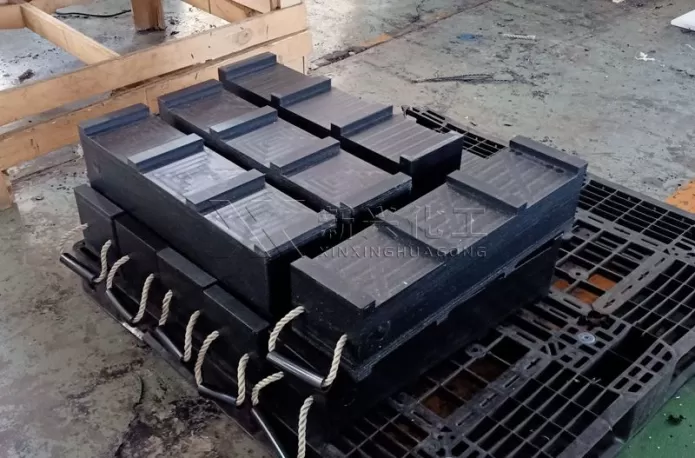
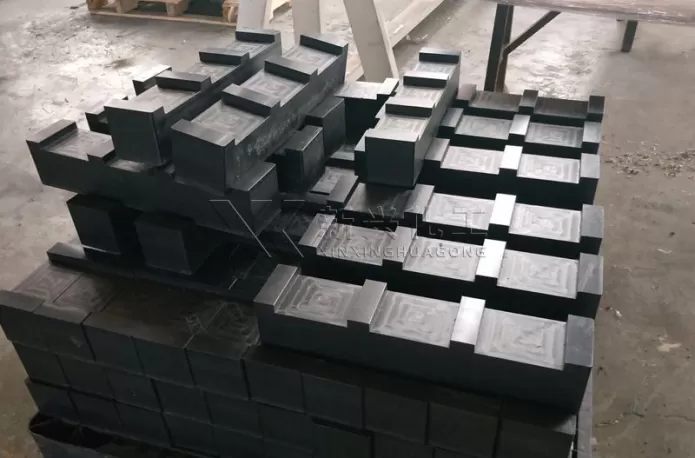
XINXING supplies lightweight HDPE mats, large-format composite road panels, solid core access mats, overlapping heavy-duty mats, connectors, crane outrigger pads and cribbing products for different civil engineering applications.
The appropriate mat series should be selected according to vehicle loads, axle or track pressure, soil-bearing capacity, traffic frequency, roadway layout and installation duration.
Rain, groundwater, poor drainage and disturbed soil can cause construction vehicles to sink, lose traction or create deep ruts. Civil engineering ground protection mats spread vehicle loads over a wider area and provide a defined route across weak ground.
Heavy machinery and material deliveries often need to enter the site before permanent access roads are completed. Modular temporary road mats allow access routes to be installed, extended and relocated as the project progresses.
Vehicle traffic can damage asphalt, paving, grass, landscaped areas and prepared subgrades. A correctly selected protective layer reduces direct contact between tyres, tracks and the existing surface.
Without a clearly defined access system, vehicles may travel across unsuitable ground or enter restricted areas. Connected mats create visible routes for deliveries, plant movement and site traffic management.
Temporary access mats can reduce direct tyre contact with soft soil and help limit mud being transported from working areas onto public roads or finished sections of the site.
Crane outriggers, mobile plant stabilisers and certain piling operations generate concentrated loads that cannot be evaluated using total machine weight alone. These areas may require dedicated outrigger pads, cribbing or an engineered support platform in addition to roadway mats.
Create site entrances, internal haul routes and temporary access roads for delivery trucks, excavators, loaders, dump trucks and service vehicles.
Provide temporary access for earthmoving equipment, concrete deliveries, cranes and maintenance vehicles around bridge abutments, road widening works and highway construction zones.
Build temporary routes alongside railway corridors, stations and track improvement projects where permanent access is limited or existing ground must be protected.
Create access routes for piling rigs, support vehicles and material deliveries. Working areas for piling equipment require project-specific assessment of machine weight, crawler dimensions, rig configuration and soil conditions.
Support excavators, pumps, pipe delivery vehicles and installation crews during drainage, culvert, flood defence, water treatment and river engineering projects.
Provide temporary access for cable installation, pipeline work, power transmission, telecommunications, water networks and emergency utility repairs.
Protect existing roads, concrete, paving and surrounding ground during demolition, contaminated land treatment and brownfield redevelopment.
Form temporary vehicle routes, equipment staging areas and material handling zones around tunnel portals, shafts and underground construction compounds.
Establish construction and maintenance access for wind farms, solar farms, substations and power transmission projects.
Create separated surfaces for pipes, reinforcement steel, equipment, site cabins and construction materials while reducing direct contact with mud and standing water.
| Access Area | Main Purpose | Key Planning Factors |
|---|---|---|
| Site entrance | Connect the public road to the construction compound | Road transition, turning radius, drainage and mud control |
| Internal haul road | Move plant, vehicles and materials across the site | Vehicle width, traffic direction, axle load and passing areas |
| Equipment access lane | Provide access for excavators, piling rigs, cranes and service vehicles | Track dimensions, machine configuration and ground-bearing capacity |
| Turning area | Allow trucks and machinery to change direction | Turning radius, lateral forces and panel connection layout |
| Working platform | Support equipment movement and general construction activity | Platform dimensions, load distribution and drainage |
| Material staging area | Store pipes, tools, components and construction materials | Point loads, storage duration and material handling equipment |
| Temporary parking | Provide parking for project and service vehicles | Vehicle quantity, ground condition and traffic frequency |
| Pedestrian route | Separate personnel from mud and vehicle traffic | Slip resistance, edge transitions and route separation |
| Mat System | Main Characteristics | Recommended Civil Engineering Uses |
|---|---|---|
| Quick Mats | Lightweight HDPE panels that can be installed and repositioned by a small team | Utility vehicles, pedestrian routes, landscaping protection and light-to-medium construction access |
| Dura Mats | Large-format heavy-duty composite panels with raised traction surfaces | Construction roads, heavy vehicle routes, equipment staging and general civil engineering access |
| Base Mats | Large polyethylene panels offering broad ground coverage with fewer joints | Long temporary roads, utility corridors and large construction compounds |
| Duphi Mats | Low-profile solid core composite road mats with overlapping edges | Connected construction roads, infrastructure projects and repeated vehicle access |
| Amphi Mats | Thick large-format composite access mats for severe ground conditions | Wetlands, saturated soil, heavy industrial access and demanding equipment routes |
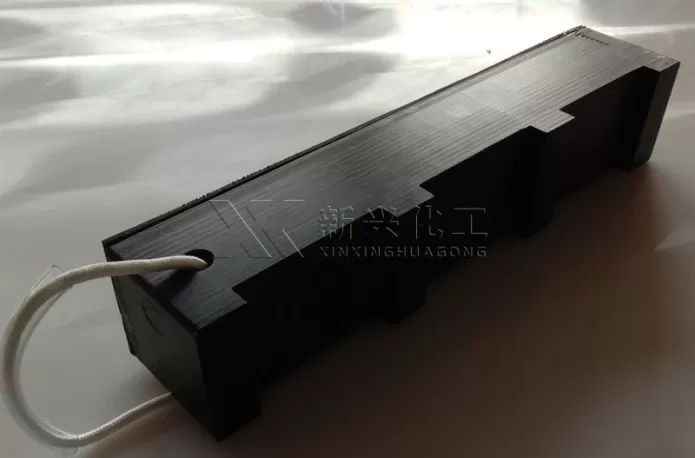
| Outrigger Pads | Dedicated load-spreading pads for stabilisers and outrigger loads | Mobile cranes, concrete pumps, aerial platforms and stabilised construction equipment |
A civil engineering project may require more than one mat type. Lightweight mats can be used for pedestrian or utility access, while larger composite panels form heavy vehicle routes and dedicated outrigger pads manage concentrated stabiliser loads.
Temporary road mats provide a defined travel surface when rain and soft ground would otherwise interrupt deliveries, plant movement or maintenance work.
The panels distribute vehicle loads over a wider area, helping reduce deep tyre ruts, track damage and displacement of weak surface soil.
Mats can protect paved roads, block paving, concrete, finished landscaping and prepared subgrades from direct tyre and track contact.
Connected mats define where vehicles should travel and help separate plant movement from pedestrian zones, storage areas and environmentally restricted ground.
Where site and load conditions are suitable, reusable mat systems can reduce the volume of imported stone needed for temporary access roads and the removal work required after project completion.
Modular roads can be extended, redirected or removed as excavation, structural work, utility installation and landscaping activities move across the site.
Plastic and composite mats do not rot or splinter like timber. After cleaning and inspection, they can be transported and reused across multiple civil engineering projects.
Separating heavy traffic from the underlying surface can reduce the extent of grading, turf replacement and ground repair required after temporary access is removed.
| Ground Condition | Main Risk | Matting Consideration |
|---|---|---|
| Grass and landscaped ground | Rutting, soil compaction and surface damage | Use lightweight or medium-duty mats according to vehicle weight and traffic frequency |
| Mud and wet soil | Vehicle sinking, wheelspin and mud transfer | Select raised traction surfaces and secure panel connections |
| Saturated or marshy ground | Low ground-bearing capacity and differential settlement | Consider large heavy-duty panels, geotextiles, drainage and subgrade improvement |
| Sand and loose fill | Tyre sinking and lateral material movement | Use broad panels and minimise sharp turning or braking |
| Prepared subgrade | Contamination and surface disturbance before final construction | Use clean mats with controlled vehicle routes |
| Asphalt, concrete or paving | Track marks, impact damage and surface contamination | Confirm the mat underside and equipment type are suitable for the finished surface |
| Sloping ground | Panel movement and reduced vehicle stability | Site-specific engineering assessment and additional restraint may be required |
Ground protection mats cannot correct every unsuitable site condition. Extremely weak soil, unsupported voids, steep slopes, flooding or unstable fill may require drainage, grading, geotextiles, engineered sub-base construction or other ground improvement before mat installation.
Provide the maximum operating weight, axle load, tyre dimensions, tyre inflation pressure and crawler track contact area. Total machine weight alone is not sufficient for product selection.
Identify whether the route crosses grass, mud, sand, wet soil, prepared subgrade, asphalt or concrete. Where available, provide ground-bearing capacity, soil reports, site photographs and drainage information.
Occasional straight-line vehicle access creates different mat demands from continuous truck traffic, tracked equipment, frequent turning or repeated braking.
Specify the required road length, usable width, passing zones, turning areas, work platforms, storage areas and transitions to permanent roads.
A roadway used for several days may require a different system from a project route exposed to repeated traffic and seasonal weather for several months.
Lightweight mats may be installed manually, while large composite road panels require forklifts, excavators, cranes or other suitable mechanical lifting equipment.
Include restrictions relating to noise, working hours, environmental protection, overhead cables, buried services, road width and equipment access.
Type of civil engineering project
Vehicle and equipment models
Maximum operating weight
Maximum axle load
Tyre size and inflation pressure
Rubber or steel track dimensions
Soil type and ground condition
Ground-bearing capacity when available
Site photographs or soil reports
Required roadway length and width
Turning and passing areas
Working platform dimensions
Expected traffic frequency
Installation period
Project temperature and weather conditions
Available lifting equipment
Required quantity
Destination port or delivery location
Based on this information, XINXING can recommend a suitable mat series, panel size, thickness, traction pattern, connection system and preliminary quantity.
The usable roadway width should account for the widest vehicle, normal steering variation, edge clearance and whether one-way or two-way traffic is required.
Vehicle turns create lateral forces that can move panels or strain connectors. Turning zones may require additional roadway width, more secure connections and more frequent inspection.
Long routes may require passing zones, delivery waiting areas and safe locations for vehicles to stop without blocking the main access road.
The transition between public roads, permanent surfaces and temporary mats should minimise abrupt height changes and unsupported panel edges.
The roadway layout should not unintentionally block drainage or redirect water into excavations, neighbouring property or environmentally sensitive areas.
Projects should consider spare panels for route extension, replacement, unexpected soft areas or changes to the construction programme.
Road mats used for vehicle travel should not automatically be treated as crane outrigger pads or engineered piling platforms.
Concentrated loads from cranes, concrete pumps, aerial platforms, piling rigs and stabilised equipment require additional information, including:
Maximum outrigger or stabiliser reaction
Outrigger foot dimensions
Equipment operating configuration
Boom length and working radius
Crawler track dimensions
Ground-bearing capacity
Required allowable ground pressure
XINXING supplies heavy-duty outrigger pads and cribbing products for load distribution. The final support arrangement must be confirmed by the equipment operator, appointed person or qualified project engineer.
Civil engineering routes may cross buried utilities, drainage pipes, culverts, tanks, basements or other underground structures. Ground mats can help distribute surface loads, but they do not guarantee protection for an unknown or inadequately rated underground structure.
Before installing a temporary roadway:
Confirm the location and depth of buried services
Review allowable loads over underground structures
Obtain approval from the responsible engineer or asset owner
Use additional load-spreading layers where specified
Restrict vehicle types and traffic movements where necessary
Inspect the planned route and identify weak ground, slopes, drainage channels, buried services and unsupported openings.
Remove sharp stones, scrap metal and large debris that could create concentrated loads beneath the mats.
Complete required drainage, grading, geotextile installation or subgrade improvement.
Establish a stable starting point and confirm the roadway alignment.
Position the first panel using the appropriate manual or mechanical handling method.
Align additional panels and install the specified two-way, four-way, bolted, locking or overlapping connection system.
Check edge transitions, turning areas and roadway width before vehicle use.
Conduct a controlled first vehicle pass.
Inspect panel movement, ground settlement, surface damage and connector security.
Repeat inspections after heavy rain, repeated turning, braking or changes in ground conditions.
Ground protection mats must remain adequately supported by the ground. They must not be used as freestanding bridges over trenches, drainage channels, excavations or unsupported gaps unless a qualified engineering design provides an appropriate support structure.
Check for displaced panels, loose connectors, damaged edges, excessive surface wear, local settlement and water accumulating around the temporary road.
Remove mud, aggregate, oil and construction debris using water or suitable site-cleaning equipment. Cleaning requirements may be stricter when mats move between environmentally controlled sites.
Remove panels using the recommended lifting points or handling method. Avoid dragging large mats over sharp objects that may damage their surfaces or edges.
Store cleaned mats on stable, level supports. Keep connectors, bolts and accessories counted and identified for the next installation.
Inspect each mat before reuse. Panels with significant cracks, damaged connection points, severe deformation or excessive surface wear should be removed from service pending further assessment.
XINXING has manufactured engineering plastic products since 1989 and supplies matting systems for construction, civil engineering, energy, utilities and industrial access.
Buyers can source lightweight ground protection mats, heavy-duty composite road panels, solid core access mats, overlapping road systems, connectors, outrigger pads and cribbing products from one manufacturer.
XINXING operates three factory sites with a combined factory area of more than 100,000 square metres, supporting different mat categories and project quantities.
Our production capabilities include moulding, extrusion, CNC machining, cutting, assembly, inspection, packaging and warehousing.
Our team can compare equipment loads, ground conditions, roadway layouts, traffic frequency and installation requirements before recommending a suitable mat system.
Selected products can be customised with different dimensions, thicknesses, colours, traction patterns, connection positions, logos and asset identification.
Samples and technical product information are available for selected mat systems. Confirm sample dimensions, freight arrangements and project requirements with XINXING before ordering.
Civil engineering buyers can combine road mats, connection accessories, outrigger pads and related ground support products within a coordinated project order.
Civil engineering ground protection mats should be ordered according to an approved technical specification rather than only by a general product name or total load figure.
Before placing an order, confirm:
Selected mat series and model
Panel dimensions and tolerances
Material and panel structure
Panel thickness and unit weight
Surface traction pattern
Connection system and accessory quantity
Colour, logo and asset identification
Packing and container loading method
Inspection and documentation requirements
Destination port and delivery schedule
If a tender requires a specific test standard, certificate or third-party inspection, include the exact requirement in the enquiry. XINXING will confirm document availability and testing feasibility before the order is placed.
They are used to create temporary roads, equipment access routes, working platforms, material staging areas and pedestrian paths on civil engineering and infrastructure projects.
Dura Mats, Duphi Mats, Base Mats and Amphi Mats are available for different heavy equipment and ground conditions. Selection depends on axle load, track pressure, soil-bearing capacity, traffic frequency and roadway design.
Mats can provide access routes for piling equipment, but the piling rig working platform requires a project-specific engineering assessment. Machine weight, crawler dimensions, operating configuration and ground conditions must be reviewed.
Ground mats can create crane access routes and general working surfaces. Crane outrigger reactions require correctly sized outrigger pads, cribbing or an engineered support system.
Mats may help distribute surface loads, but they do not guarantee protection for buried services or underground structures. The route and allowable loads must be approved by the responsible engineer or asset owner.
Yes. Raised traction patterns and connected panels can improve access over mud. Extremely weak or saturated ground may also require drainage, geotextiles, grading or subgrade improvement.
Not in every situation. Mat systems can reduce aggregate requirements where the ground and loads are suitable, but some sites still require an engineered sub-base or ground improvement.
Steel tracks generate concentrated loads and may damage certain surface patterns. Provide the machine weight, track dimensions and planned operating movements before confirming suitability.
Some mat systems can protect finished surfaces, but the mat underside, equipment type, turning movements and risk of trapped debris must be reviewed before installation.
Width depends on the vehicle, edge clearance, steering movement and whether one-way or two-way traffic is required. Turning and passing areas should be planned separately.
No. Standard ground protection mats require continuous ground support and should not be used as bridges over unsupported openings without a separate engineered structure.
Inspection frequency depends on site conditions and traffic. Additional checks should be carried out after heavy rainfall, repeated turning, braking, tracked equipment use or visible ground settlement.
Custom dimensions, thicknesses, colours, surface patterns, logos and asset identification are available for selected products and order quantities.
Provide the project type, equipment models, operating weights, axle or track information, ground condition, roadway dimensions, traffic frequency, installation period, required quantity and destination port.
Send XINXING your site photographs, soil information, vehicle specifications and proposed temporary roadway or working platform layout.
Our team will recommend a suitable combination of civil engineering ground protection mats, connection accessories, outrigger pads and ground support products for your project.
Contact us for product specifications, mat quantity planning and a civil engineering project quotation.

Establish Access to Work Sites in Extreme Conditions with Our Strong, Durable Construction Mats
Sometimes tough jobs need tough solutions, so XINXING mat has created a range of heavy duty ground mats that are super strong, robust and reliable.
Easy to use and inexpensive to lay, our ground protection solutions are cost effective and give a winning return on investment.
Ground mats are designed to be lightweight and easy to connect, allowing for quick deployment and adjustment to meet different on-site needs.
For situations where heavy machinery needs to be operated on uneven or soft ground, such as cranes or other heavy construction equipment, laying ground mats can provide a more stable and level foundation, ensuring safe operation of the machinery and equipment.
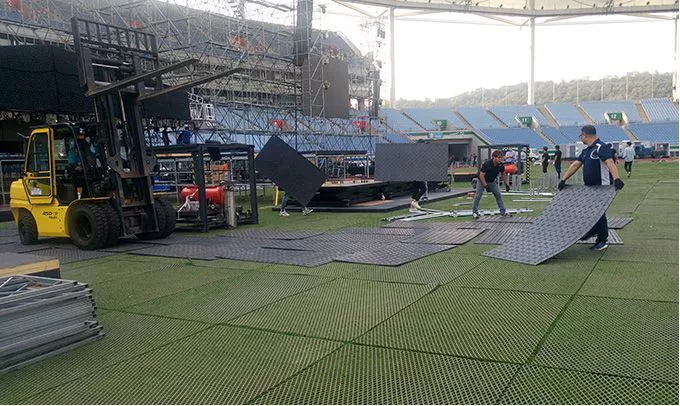
Utility companies need to traverse difficult terrain when performing routine maintenance, upgrading power lines and cables, repairing storm damage to lines and power grids, and especially when laying new power lines. XINXING’ group has temporary roadway solutions for service vehicles, construction equipment, and utility components to work on off-road sites. Diggers, cranes, and other heavy equipment roll smoothly over XINXING’s anti-skid access mats.
Whether a portable access road is needed in a remote area or a stable platform is needed in the mountains, with minimal environmental impact by preventing rutting, soil-compaction, and other ecological damage.
Infrastructure construction often requires heavy machinery and vehicles to pass over grass, mud or fragile surfaces. Ground protection mats can create temporary roads, allowing these vehicles to pass safely while minimizing the impact on the environment.
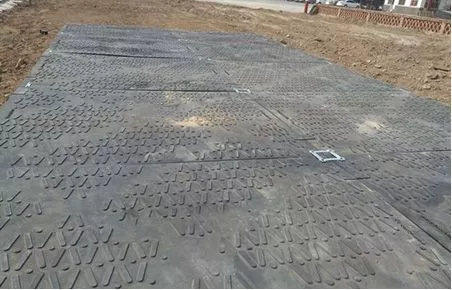 Temporary Roadways
Create temporary roadways to access construction sites with XINXING Systems’ matting. A strong Joining system prohibits differential movement between panels, ensuring a strong stable surface for over-sized construction equipment to traverse any ground conditions.
Temporary Roadways
Create temporary roadways to access construction sites with XINXING Systems’ matting. A strong Joining system prohibits differential movement between panels, ensuring a strong stable surface for over-sized construction equipment to traverse any ground conditions.
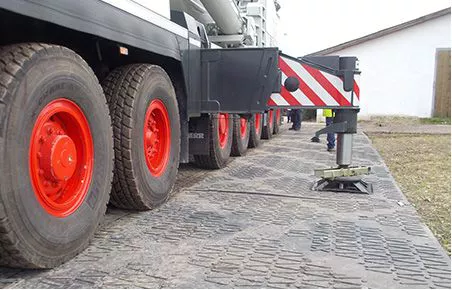 Safe Working Platforms
Create safe and sturdy, fully connected working platforms for construction sites in any climate or soil conditions with XINXING’s heavy-duty construction mats. Protect expensive equipment, vehicles, office cabins and trailers from sinking into soft or muddy ground while providing personnel with safe, dry, anti-slip footing.
Safe Working Platforms
Create safe and sturdy, fully connected working platforms for construction sites in any climate or soil conditions with XINXING’s heavy-duty construction mats. Protect expensive equipment, vehicles, office cabins and trailers from sinking into soft or muddy ground while providing personnel with safe, dry, anti-slip footing.
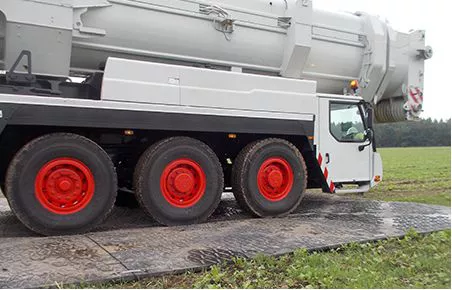 Environmental Protection
XINXING Systems' construction matting is the economical, ecological, and safe alternative to traditional wooden crane and dragline mats. Signature mats provide anti-slip protection for workers and vehicles while allowing heavy equipment to traverse uneven or soft terrain with minimal damage to the native surface.
Environmental Protection
XINXING Systems' construction matting is the economical, ecological, and safe alternative to traditional wooden crane and dragline mats. Signature mats provide anti-slip protection for workers and vehicles while allowing heavy equipment to traverse uneven or soft terrain with minimal damage to the native surface.
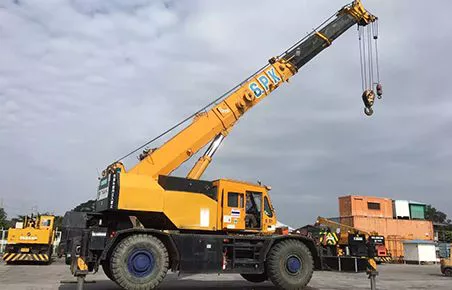 Support Crane & Keep Balance
XINXING matched products - Outrigger Pad, a strong pads to support heavy truck and crane in bad ground condition, at the same time to protect the ground no break in pressure of heavy equipment.
Support Crane & Keep Balance
XINXING matched products - Outrigger Pad, a strong pads to support heavy truck and crane in bad ground condition, at the same time to protect the ground no break in pressure of heavy equipment.
Established in 1989,located in Qingdao city of Shandong province, Shandong Ningjin Xinxing Chemical Co.,LTD. is the most professional manufacture of engineering plastics and the only manufacturer who has complete MATS system in China.
Phone
+86 189 0640 6469
Location
Liaohe Road, Ningjin Industrial Zone, Dezhou City, Shandong Province, China.
Copyright © Shandong Ningjin Xinxing Chemical Co., Ltd. All Rights Reserved |
Sitemap
| Powered by