
XINXING event ground protection mats help outdoor event organisers create temporary pedestrian routes, vehicle access roads, parking areas and equipment paths while protecting grass, artificial turf, paving and other sensitive surfaces.
Festivals, concerts, sporting events, exhibitions, weddings and temporary venues generate several different types of traffic. Guests require stable walking routes, suppliers need access for vans and forklifts, stage crews move equipment across the site, and emergency vehicles may need a clearly defined access lane.
A planned ground protection mat system separates this traffic from the underlying surface, helping reduce turf damage, deep ruts, mud, soil displacement and post-event restoration work.
XINXING supplies lightweight Quick Mats for manually installed event routes as well as larger composite road panels for heavier vehicles, repeated equipment traffic and demanding ground conditions.
Thousands of guests walking over the same route can flatten turf, compact wet soil and turn entrance areas into mud. Connected event ground protection mats create a defined pedestrian route and separate footwear from the underlying surface.
Delivery vans, forklifts, telehandlers, utility vehicles and stage equipment can create ruts before the event begins. Temporary access mats help distribute these loads and keep vehicle movement within planned routes.
Rain can cause walkways, vendor areas and backstage routes to become muddy or difficult to use. Raised traction patterns provide a more predictable travel surface for suitable pedestrian and vehicle applications.
Concert stages, seating, barriers, catering equipment and repeated foot traffic can damage natural, synthetic or hybrid turf. Ground protection should be selected according to the turf system, installation duration, weather and expected loads.
Uneven grass, loose sand and soft soil may restrict access for wheelchairs, pushchairs, mobility aids and service carts. A properly designed low-profile route can improve access, subject to local accessibility requirements.
Without clearly defined routes, pedestrians, suppliers and vehicles may use the same areas. Different mat colours, layouts and connection systems can help separate guest access from backstage, service and emergency routes.
Stage legs, lighting towers, barriers, temporary structures and equipment stabilisers can create concentrated loads. These loads should not be assessed using total equipment weight alone and may require dedicated load-spreading pads or an engineered foundation.
| Event Area | Main Traffic or Load | Ground Protection Requirement |
|---|---|---|
| Guest entrance | High pedestrian traffic, queues and mobility aids | Low-profile, slip-resistant and securely connected walkway |
| Pedestrian pathway | Continuous foot traffic | Pedestrian-friendly surface with controlled edges and transitions |
| Wheelchair and pushchair route | Wheelchairs, mobility aids and pushchairs | Firm route with suitable width, transitions and local accessibility review |
| Backstage access | Crew, carts, forklifts and equipment | Higher traction and load capacity than a general guest walkway |
| Vendor access | Delivery vans, catering vehicles and service carts | Connected vehicle route with turning and unloading areas |
| Temporary parking | Cars, vans and controlled event traffic | Wide multi-panel layout with entrance and turning sections |
| Stage construction route | Trucks, forklifts, telehandlers and rigging equipment | Heavy-duty mat selection based on axle and wheel loads |
| Emergency access lane | Emergency and service vehicles | Clearly defined route with sufficient width and verified vehicle suitability |
| Tent and marquee area | Guests, tables, chairs and service equipment | Clean and stable surface selected for the intended flooring use |
| Portable restroom area | Guests, servicing vehicles and temporary units | Pedestrian route combined with a separate service access plan |
| Material storage area | Barriers, staging components and event equipment | Ground separation with assessment of storage and point loads |
| Mat System | Main Characteristics | Recommended Event Uses |
|---|---|---|
| Quick Mats | Lightweight HDPE panels available with hand holes, different traction patterns and two-way or four-way connectors | Guest walkways, grass protection, light vehicle access, temporary parking and frequently repositioned routes |
| Dura Mats | Large-format heavy-duty composite road panels | Stage construction traffic, heavy delivery vehicles, equipment routes and repeated backstage access |
| Base Mats | Large panels designed to cover broad areas with fewer individual joints | Long vehicle routes, large event compounds, logistics zones and temporary parking areas |
| Duphi Mats | Low-profile solid core road panels with overlapping edges | Connected service roads and repeated vehicle traffic where reduced panel gaps are required |
| Amphi Mats | Thick heavy-duty composite mats for severe soft ground and demanding access | Large festival infrastructure, saturated sites and heavy equipment routes |
| Outrigger Pads | Dedicated pads for stabiliser and outrigger load distribution | Mobile stages, lighting equipment, cranes, aerial platforms and stabilised event equipment |
Quick Mats are normally the primary event ground protection mats when manual handling, fast installation and grass protection are the main priorities.
Larger composite panels should be considered for heavy trucks, repeated forklift movements, stage construction equipment or sites with very weak ground. One event may require different mat systems for guest, vehicle and equipment zones.
| Specification | Available Options | Event Planning Consideration |
|---|---|---|
| Material | HDPE | Non-absorbent material suitable for reusable outdoor access applications |
| Standard sizes | 2440 × 1220 mm and 2440 × 910 mm | Select according to route width, storage space and handling requirements |
| Standard thicknesses | 12.7 mm, 15 mm, 18 mm and 28 mm | Final thickness depends on traffic, ground conditions and surface protection requirements |
| Surface | Vehicle traction or pedestrian-friendly patterns | Pedestrian and vehicle zones may require different tread configurations |
| Handling | Integrated hand holes available | Suitable sizes can be installed and repositioned by a small event crew |
| Connection | Two-way and four-way connectors | Use two-way connections for routes and four-way connections for wider areas |
| Colours | Black, white, red, yellow, green or customised | Colours may be used for branding or route identification |
| Customisation | Size, thickness, colour and logo | Subject to product design, manufacturing feasibility and order quantity |
| Suitable surfaces | Grass, mud, sand, snow, gravel and prepared soil | Inspect the venue surface before confirming the mat specification |
| Installation | Manual installation for suitable sizes and weights | Large event areas require an installation plan, trained crew and organised stacking |
Selected Quick Mats may support significant vehicle loads under suitable conditions. A published total vehicle load must not be treated as a universal safe working load.
Actual performance depends on mat thickness, axle load, tyre pressure, contact area, ground-bearing capacity, vehicle movement, connector layout and the condition of the underlying surface.
Guest walkways should use a suitable low-profile traction surface that is comfortable for normal walking and easier for wheeled mobility equipment to cross.
The route should have sufficient width, secure connections and controlled entry and exit transitions. Local accessibility and public event requirements must also be considered.
Temporary parking and supplier routes can be formed using connected Quick Mats when the selected panel and ground condition are suitable for the vehicle loads.
Sharp steering, sudden braking and repeated turning should be minimised, particularly over natural turf or wet ground.
Forklifts and telehandlers can generate concentrated wheel loads, especially when carrying stage components, barriers or other equipment.
Provide the maximum loaded weight, axle loads, tyre dimensions and operating route before selecting a mat system. Larger composite road panels may be required for repeated movements.
Stage, lighting, sound and catering deliveries may require a separate heavy-duty temporary road rather than the same mats used for pedestrian walkways.
Route width, turning radius, unloading position, traffic frequency and ground-bearing capacity must be included in the selection process.
Emergency access lanes should be planned with the event safety team and relevant authorities. The mat system must be suitable for the expected vehicles, route width, access direction and weather conditions.
A wheelchair route should provide a firm, continuous and sufficiently wide surface with controlled joints and transitions.
Product suitability and route design must be reviewed against the accessibility requirements applicable to the event location.
Create guest walkways, backstage routes, stage construction access, catering areas, equipment paths, temporary parking and emergency lanes across open fields and stadium surfaces.
Protect natural, artificial or hybrid turf during concerts, exhibitions, seating installation, equipment movement and temporary venue conversion.
Form access routes between entrances, exhibition tents, demonstration areas, service zones and temporary parking.
Provide temporary pedestrian access over lawns and soft ground for guests, catering personnel, equipment and service vehicles.
Protect playing fields, tracks, parkland and surrounding grass during temporary seating installation, vendor operations, media access and spectator movement.
Create temporary access for visitors, exhibitors, livestock support vehicles, machinery demonstrations and vendor deliveries over fields and rural ground.
Establish branded pedestrian routes, display zones, temporary parking and equipment access across lawns, parks and temporary outdoor venues.
Provide reusable routes for guests, food vendors, rides, temporary facilities and local service vehicles.
Protect grass, paving and soft ground during the movement of production vehicles, lighting equipment, temporary sets and technical crews.
Create defined pedestrian and equipment routes over sand. Beach access routes require consideration of slope, loose ground, route width and applicable accessibility requirements.
Confirm whether the venue uses natural grass, reinforced turf, artificial turf or a hybrid system. Each surface responds differently to pressure, heat, moisture and reduced airflow.
The acceptable coverage period depends on the turf type, season, weather and mat design. Obtain approval from the venue or turf manager before installation.
Remove stones, metal, cable ties and other debris before laying event ground protection mats. Trapped objects can create pressure points or damage the underlying turf.
Vehicles should follow designated routes and avoid unnecessary turning, wheelspin and emergency braking. These movements increase lateral stress on both the mats and turf.
Entrances, stage routes, food service areas and turning zones should be checked regularly for panel movement, trapped debris, settlement and turf stress.
Remove and clean mats promptly after the event when permitted by the venue plan. Inspect the turf as each area is uncovered.
Artificial and hybrid surfaces may require protection from vehicle tyres, equipment wheels, sharp edges, fuel, oil, heat and concentrated loads.
Before installing mats over an artificial or hybrid field, confirm:
Turf manufacturer requirements
Venue warranty restrictions
Permitted equipment and vehicle loads
Maximum coverage duration
Temperature and ventilation requirements
Suitable mat underside
Requirement for an intermediate protective layer
Cleaning and contamination controls
Mats alone do not guarantee that every artificial turf system will remain undamaged. Obtain written approval from the responsible venue or turf manager before installation.
The walkway width should reflect expected attendance, two-way pedestrian movement, queueing, mobility aids and emergency egress requirements.
Select a pedestrian-friendly traction pattern rather than automatically using the most aggressive vehicle tread.
Connect panels securely to reduce separation and exposed edges. Two-way connectors are suitable for straight routes, while four-way connectors can form entrances, waiting areas and wider platforms.
Abrupt height changes at the beginning and end of a route can create access and trip concerns. Plan suitable transitions according to the panel thickness and local event requirements.
Inspect the route for low points and water flow. The mat layout should not unintentionally create standing water or redirect water into tents, electrical areas or guest facilities.
Night-time events may require route lighting, edge identification, signs or contrasting mat colours to help guests follow designated paths.
One-way traffic can reduce turning, reversing and congestion on temporary mat roads. Where two-way traffic is necessary, provide sufficient width and passing space.
Parking entrances, delivery zones and dead-end routes require additional mat coverage for vehicle turning and manoeuvring.
Guest walkways should be physically or operationally separated from delivery, backstage and parking routes wherever possible.
Low speed, gradual steering and controlled braking reduce mat movement and limit stress on the underlying turf.
Rain can reduce ground-bearing capacity even when the surface appears stable. Reinspect vehicle routes after significant weather changes.
The event traffic plan should include procedures for vehicles that leave the mat route or encounter unexpectedly weak ground.
Event setup and teardown may create higher loads than the event itself. Trucks, forklifts, telehandlers, mobile cranes, stage systems and lighting equipment should therefore be assessed separately from pedestrian traffic.
Provide the following information before selecting mats for equipment access:
Vehicle or equipment type
Maximum loaded weight
Maximum axle load
Tyre size and inflation pressure
Track dimensions when applicable
Number of vehicle movements
Turning and braking requirements
Ground-bearing capacity
Route and unloading area dimensions
Heavy equipment may require Dura Mats, Base Mats, Duphi Mats or Amphi Mats rather than lightweight event walkways.
Ground protection road mats should not automatically be used as support pads for stage legs, cranes, mobile stages, lighting towers or stabilisers.
Concentrated load areas may require:
Dedicated outrigger pads
Cribbing or blocking
Structural load-spreading plates
Engineered temporary foundations
Ground-bearing assessment
XINXING supplies outrigger pads and ground support products. Final support arrangements must be approved by the equipment supplier, event engineer or other responsible professional.
Separate the site into pedestrian, light vehicle, heavy vehicle, backstage, parking, emergency and equipment support areas.
Identify natural grass, artificial turf, mud, sand, gravel, asphalt, concrete, paving and any transitions between them.
Consider recent rainfall, forecast weather, drainage, temperature and how the ground may change during setup, the event and removal.
Quantity calculations should include more than the length of the main walkway. Entrances, turning zones, queues, parking, stages, vendor areas and spare mats must also be considered.
Determine the number of installers, available installation time, lifting equipment, storage area and planned installation sequence.
Plan how dirty mats will be lifted, cleaned, stacked and removed without interfering with venue restoration or other contractors.
Type of event
Event dates
Setup and teardown period
Expected visitor attendance
Natural grass, artificial turf or other surface type
Current ground and drainage condition
Pedestrian walkway length and width
Wheelchair and mobility access requirements
Vehicle types and maximum weights
Axle loads and tyre dimensions
Vehicle traffic frequency
Parking area dimensions
Backstage and equipment route dimensions
Stage and temporary structure information
Required mat colour
Logo or route identification requirements
Required quantity
Destination port or delivery location
A venue plan, traffic plan and site photographs allow XINXING to recommend different mat systems for guest access, vehicles, parking and event equipment.
The number of event ground protection mats should be calculated from the complete planned coverage area and the usable dimensions of the selected mat.
Include the following areas in the quantity calculation:
Main guest entrance
Pedestrian walkways
Queueing and waiting zones
Accessible routes
Vendor and catering access
Backstage equipment routes
Temporary parking
Vehicle turning areas
Emergency access lanes
Equipment and material staging areas
Spare panels for route changes or damaged sections
Two-way and four-way connectors
Send XINXING the venue layout and required traffic zones for a preliminary panel and connector calculation.
Inspect the venue surface and identify soft ground, slopes, drainage routes, underground services and restricted areas.
Remove sharp stones, metal, cable ties, branches and other debris from the installation area.
Confirm the route width, traffic direction and installation sequence using the event site plan.
Position the first mat on a stable part of the route.
Orient the selected pedestrian or vehicle traction surface correctly.
Align additional panels and install two-way connectors for straight routes.
Use four-way connectors for wider entrances, parking areas and multi-directional layouts.
Inspect panel edges and transitions before opening the route to guests or vehicles.
Conduct a controlled first vehicle pass on vehicle routes.
Check the complete installation for panel movement, loose connections and trip concerns.
Reinspect the system regularly during setup, the event and teardown.
Event ground protection mats must remain supported by the underlying ground. They must not be used to bridge drainage channels, trenches, holes or unsupported openings.
Where possible, install vehicle and equipment routes before heavy deliveries begin. Installing mats after deep rutting has occurred may require additional grading or ground preparation.
Check that the mat layout does not trap water or redirect runoff toward tents, electrical installations, stages or guest facilities.
Wet ground can allow panels to settle or move. Inspect connections and edge alignment more frequently after rainfall.
Restrict unnecessary turning, braking and acceleration on wet routes. Use event traffic personnel where required.
Remove mud and debris transferred onto walkways so that the selected traction surface remains effective.
Keep spare mats and connectors available for route extensions, unexpected soft areas or changes to the event plan.
Check high-traffic zones for displaced panels, loose connectors, damaged edges, excessive settlement and contamination.
Remove mud, food waste, oil and other material using cleaning methods suitable for the venue and mat material.
Wash mats before storage or transport. More controlled cleaning may be required when mats move between agricultural, environmentally sensitive or regulated sites.
Inspect the tread, hand holes, edges and connector positions. Separate significantly damaged panels for assessment before reuse.
Stack clean mats on a firm and level surface. Count and store connectors separately so that the complete system is ready for the next event.
HDPE event mats can be reused across multiple projects when correctly selected, installed, cleaned, stored and inspected.
XINXING has manufactured engineering plastic products since 1989 and supplies temporary matting systems for events, construction, energy, utilities and industrial access.
Buyers can source lightweight event mats, heavy-duty composite road panels, solid core access mats, connectors, outrigger pads and cribbing products from one manufacturer.
XINXING operates three factory sites with a combined area of more than 100,000 square metres, supporting multiple mat categories and project order quantities.
Our production capabilities include moulding, extrusion, CNC machining, cutting, assembly, inspection, packaging and warehousing.
XINXING can provide portable mats for pedestrian and light vehicle routes together with larger composite panels for heavy event logistics and equipment access.
Selected products can be customised with different colours, logos and asset identification for event organisers, rental companies, distributors and private-label buyers.
Our team can review the venue surface, event attendance, vehicle loads, route layout, installation period and weather conditions before recommending a mat system.
Samples and technical information are available for selected mat products. Confirm the required sample size, freight arrangement and product specification before ordering.
XINXING can prepare packing and container loading plans according to the selected panel size, connector quantity and delivery destination.
Event ground protection mats should be purchased according to an approved product specification and venue application rather than only by a general load claim.
Before confirming an order, review:
Selected product series and model
Panel dimensions and thickness
Material and unit weight
Pedestrian or vehicle traction pattern
Required mat colour
Logo or asset identification
Two-way and four-way connector quantities
Packing and pallet arrangement
Container loading quantity
Pre-shipment inspection requirements
Required technical documentation
Delivery schedule and destination
If an event tender or venue requires a named test, accessibility standard, fire requirement, turf approval or third-party inspection, include the exact requirement in the enquiry.
XINXING will confirm product applicability, document availability and testing feasibility before the order is placed. No general mat specification should be treated as automatic compliance with every local event regulation.
They are used to protect grass, turf and other surfaces while creating temporary pedestrian walkways, vehicle routes, parking areas, backstage access and equipment paths at outdoor events.
Quick Mats are normally recommended for portable pedestrian routes, turf protection and suitable light vehicle access. Heavy trucks and repeated equipment traffic may require Dura Mats, Base Mats, Duphi Mats or Amphi Mats.
Suitable Quick Mat sizes can be handled by a small installation team. Integrated hand holes are available on selected models to assist positioning and removal.
Yes. Quick Mats are commonly used to protect grass from foot and vehicle traffic. The turf condition, coverage period, weather and vehicle movements must still be controlled.
They may be suitable for selected artificial turf applications, but the turf manufacturer, venue manager and warranty requirements must be reviewed before installation.
Connected mats can create a firmer temporary route over grass, sand or soft ground. The final route width, slope, joints, transitions and surface must comply with the accessibility requirements applicable to the event location.
Yes. Pedestrian-friendly surface options are available. The route should use secure connectors and suitable entry and exit transitions.
Selected Quick Mats can support suitable cars, vans and event vehicles when correctly specified and continuously supported by the ground. Vehicle weight, axle load, tyre pressure and ground condition must be reviewed.
Not automatically. Forklifts generate concentrated wheel loads and may require thicker Quick Mats or a heavy-duty composite mat system. Pedestrian and forklift routes should normally be assessed separately.
Heavy or repeatedly loaded stage trucks may require Dura Mats, Base Mats, Duphi Mats or Amphi Mats. Provide the loaded weight, axle data and planned route before selecting a product.
General road mats should not automatically be used for concentrated structure loads. Dedicated load-spreading pads or an engineered support arrangement may be required.
Two-way connectors are commonly used for straight pathways. Four-way connectors are suitable for wider entrances, temporary parking and multi-directional layouts.
Yes. Black, white, red, yellow, green and customised colours are available for selected Quick Mat orders.
Custom logos and private-label identification are available for selected products and order quantities.
Yes. HDPE mats are non-absorbent and available with traction surfaces for wet conditions. The route still requires drainage planning, cleaning and regular inspection.
The acceptable period depends on the turf type, season, weather, temperature, mat design and venue requirements. Obtain approval from the turf or venue manager before installation.
They can create temporary pedestrian and light equipment routes over sand. The route design must consider slope, loose ground, edge support and local accessibility requirements.
No. Event ground protection mats require continuous support and must not be used as freestanding bridges over holes, trenches or drainage channels.
Remove loose debris and wash the panels using water and a cleaning method appropriate for the venue and mat material. Inspect the surface and connection points before storage.
Provide the event type, venue surface, dates, expected attendance, pedestrian route dimensions, vehicle information, parking area, equipment access requirements, required quantity, colour, logo and delivery destination.
Send XINXING your venue plan, site photographs, event dates, expected traffic and temporary access requirements.
Our team will recommend suitable event ground protection mats for guest walkways, turf protection, vehicle access, backstage routes, temporary parking and equipment areas.
Contact us for product specifications, event mat quantity planning, colour options and a project quotation.
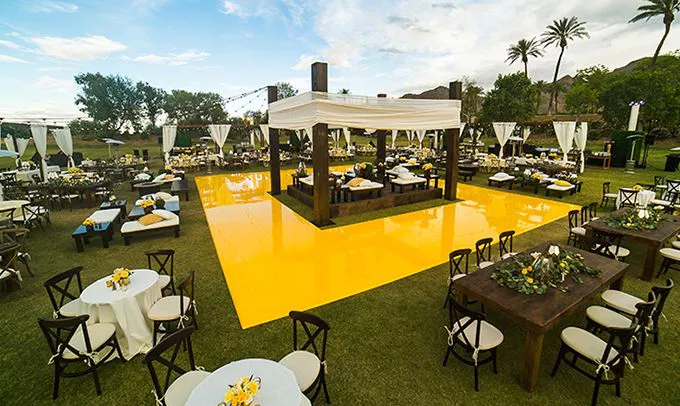
Outdoor Event and Tent Flooring
If you’re organizing an outdoor event or concert then quality ground protection needs to be a key part of your events budget.
Ground-Guards’ extensive range of heavy, medium and light duty ground care solutions cater for all event types. Our plastic mats are strong, functional and stylish with various high-traction, anti-slip tread patterns to match your specific needs.
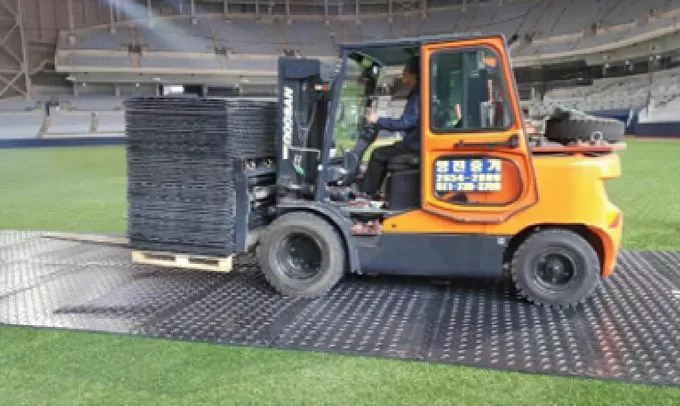
We’ll help you turn a grass field in to a secure car park. Or a dirt track into a functional wheelchair path. We’ll protect the paving stones or tarmac from heavy rigging equipment or cumbersome sets.
And best of all, our ground mats can be laid quickly, easily and efficiently by hand, with no need for specialist or expensive lifting equipment.
That’s a good idea for song and dance…
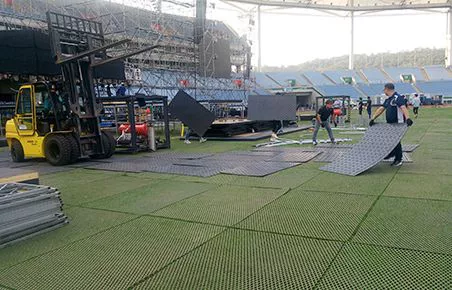 Production Grass Ground
If your activities is in stadium or other place with grass, you need our QUICKMATS to establish a temporary turf protection flooring. XINXING quickmats can be installed quickly and easily by professional connector.
Production Grass Ground
If your activities is in stadium or other place with grass, you need our QUICKMATS to establish a temporary turf protection flooring. XINXING quickmats can be installed quickly and easily by professional connector.
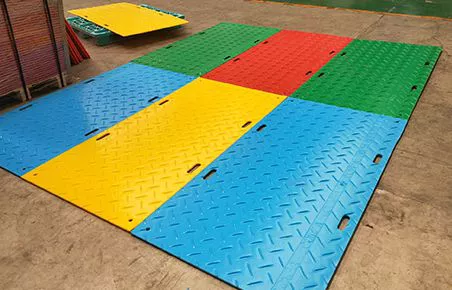 Establish Pretty Flooring
XINXING Group’s colorized Quickmats can help to custom a special outdoor part and other activities. The color and size can be customized according to your demand.
Establish Pretty Flooring
XINXING Group’s colorized Quickmats can help to custom a special outdoor part and other activities. The color and size can be customized according to your demand.
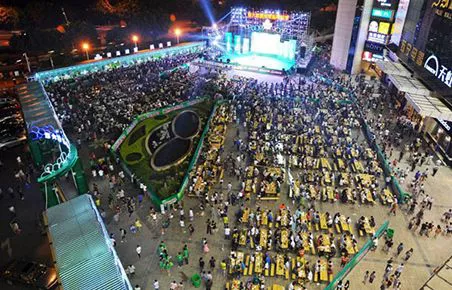 Temporary Event Flooring
XINXING outdoor events flooring mats, it’s easy to store and clean, and it can be repeated usage. Events mats system can be used as a temporary access for car and other light weight vehicle.
Temporary Event Flooring
XINXING outdoor events flooring mats, it’s easy to store and clean, and it can be repeated usage. Events mats system can be used as a temporary access for car and other light weight vehicle.
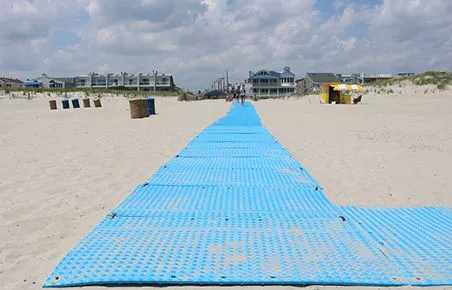 Beach Access
Light weight road panel can establish a safe access for wheelchair in beach, and pedestrian, and supply guide for blind person.
Beach Access
Light weight road panel can establish a safe access for wheelchair in beach, and pedestrian, and supply guide for blind person.
Established in 1989,located in Qingdao city of Shandong province, Shandong Ningjin Xinxing Chemical Co.,LTD. is the most professional manufacture of engineering plastics and the only manufacturer who has complete MATS system in China.
Phone
+86 189 0640 6469
Location
Liaohe Road, Ningjin Industrial Zone, Dezhou City, Shandong Province, China.
Copyright © Shandong Ningjin Xinxing Chemical Co., Ltd. All Rights Reserved |
Sitemap
| Powered by