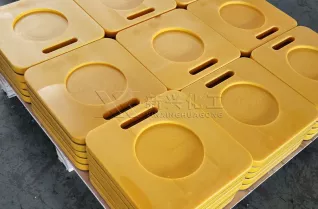
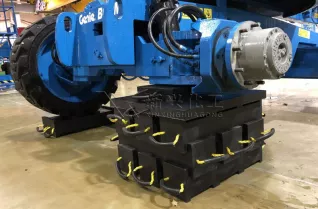
Before selecting any mat system, the most important factor is the ground itself. Different soil conditions require different load distribution strategies.
Typical site conditions include:
Soft soil / mud: requires high load-bearing capacity and wide surface distribution
Sand: needs anti-sinking support and interlocking stability
Gravel / rocky ground: requires impact resistance and puncture strength
Grassland or protected areas: needs surface protection to avoid environmental damage
Wet or swampy areas: demands anti-slip texture and water displacement channels
A common mistake is selecting mats based only on equipment weight, while ignoring soil bearing capacity. In reality, poor ground conditions increase pressure concentration even for mid-weight machines.
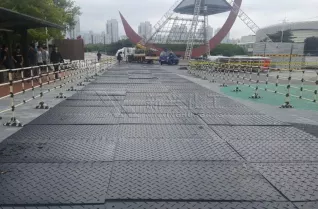
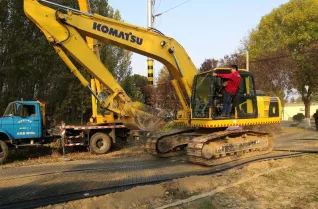
Temporary ground mats are designed to distribute weight across a wider surface area, reducing ground pressure (PSI / kPa).
Key equipment categories:
Light construction equipment
Mini excavators
Small skid steers
Compact loaders
Utility vehicles
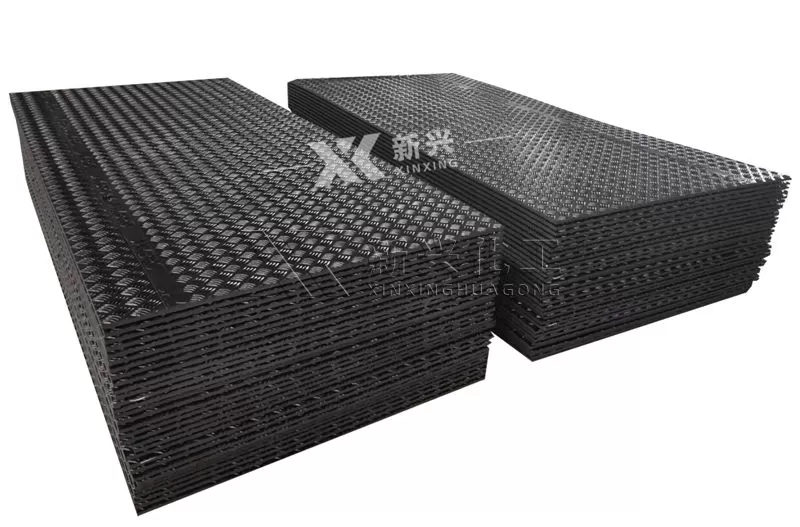
Material selection determines durability, flexibility, and lifecycle cost.
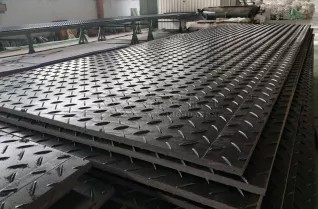
HDPE (High-Density Polyethylene) Mats
Most commonly used in modern construction access systems.
Advantages:
Lightweight and easy to transport
Resistant to moisture, chemicals, and corrosion
Reusable for multiple projects
Low maintenance
Best for:
General construction, temporary access roads, landscaping projects
Composite Mats (HDPE + reinforcement layers)
Designed for heavier and more demanding applications.
Advantages:
Higher load capacity than standard HDPE
Better rigidity and stability
Longer lifespan under repeated use
Best for:
Oil fields, wind farms, heavy civil engineering
Timber Mats (Hardwood mats)
Traditional but still widely used.
Advantages:
Excellent natural grip
Good performance on uneven terrain
Lower initial cost
Limitations:
Heavy and harder to transport
Susceptible to rot and moisture damage
Shorter lifespan
Best for:
Short-term projects or remote job sites
Steel Mats
Used in extreme load environments.
Advantages:
Maximum strength and durability
Excellent for continuous heavy loads
Highly resistant to deformation
Limitations:
Expensive
Very heavy, requiring lifting equipment
Less flexible for uneven terrain
Best for:
Industrial plants, ports, heavy crane operations
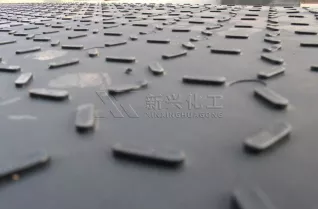
The surface pattern of ground mats directly impacts safety and usability.
Key design features to consider:
Anti-slip texture: essential for wet or muddy environments
Interlocking systems: prevents shifting under equipment movement
Tread patterns: improve vehicle traction and reduce slippage
Directional grip design: useful for access roads and ramps
Poor traction design increases accident risk, especially for tracked machinery turning under load.
One of the main purposes of temporary ground mats is reducing ground pressure.
Ask suppliers for:
PSI / kPa load distribution data
Maximum point load resistance
Deflection behavior under heavy load
A high-quality mat system should:
Spread weight evenly
Prevent sinking or rutting
Maintain structural integrity under repeated passes
This is especially important for crane setups and drilling rigs, where even slight ground deformation can affect operational safety.
On large projects, labor and installation time significantly affect total cost.
Important factors:
Weight per mat (manual handling vs machine lifting)
Interlocking or connection method
Need for tools or fasteners
Speed of deployment and removal
Modern HDPE mats often use pin-lock or tongue-and-groove systems that allow rapid installation, reducing downtime.
Instead of focusing only on unit price, procurement teams should evaluate:
Number of reuse cycles
Resistance to cracking or warping
UV resistance for outdoor storage
Maintenance requirements
A higher upfront investment can significantly reduce cost per project over time.
In many projects, ground protection is not only about equipment stability but also environmental compliance.
Temporary mats help to:
Protect vegetation and soil structure
Prevent contamination of sensitive areas
Reduce restoration costs after project completion
Some projects (especially utilities and renewable energy sites) now require certified ground protection systems as part of environmental standards.
Different regions impose different environmental stresses.
Cold climates: materials must resist brittleness and cracking
Hot climates: UV resistance is essential
Rainy environments: anti-slip and drainage features become critical
HDPE-based systems generally perform well across wide temperature ranges, making them suitable for global deployment.
Beyond product specifications, supplier reliability plays a key role.
Evaluate:
Manufacturing consistency (batch quality stability)
Testing standards (load testing reports)
Customization ability (size, thickness, color, connection type)
Delivery capacity for large-scale projects
After-sales support for replacement or expansion orders
For large infrastructure projects, inconsistent mat quality can lead to uneven load behavior across the site.
Selecting temporary ground mats for heavy equipment is a technical decision that combines soil conditions, equipment load, material engineering, and operational efficiency.
A well-chosen system will:
Improve site safety
Reduce equipment wear
Prevent ground damage
Increase construction speed
Lower long-term operational costs
The best approach is always to evaluate the full project scenario rather than focusing on a single parameter like price or thickness.

Established in 1989,located in Qingdao city of Shandong province, Shandong Ningjin Xinxing Chemical Co.,LTD. is the most professional manufacture of engineering plastics and the only manufacturer who has complete MATS system in China.
Phone
+86 189 0640 6469
Location
Liaohe Road, Ningjin Industrial Zone, Dezhou City, Shandong Province, China.
Copyright © Shandong Ningjin Xinxing Chemical Co., Ltd. All Rights Reserved |
Sitemap
| Powered by