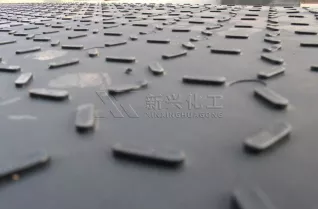
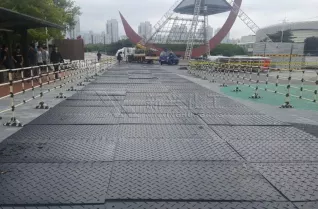
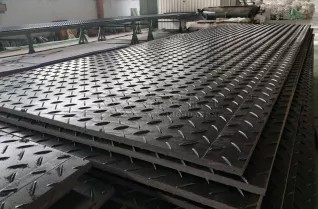
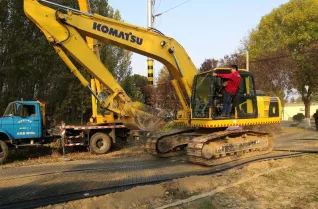
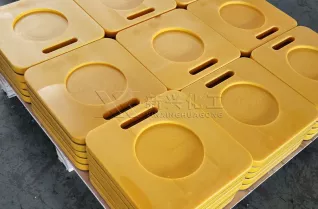
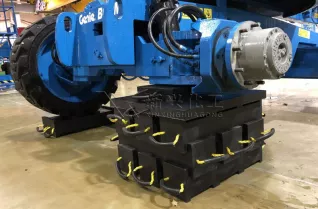
Muddy ground conditions are one of the most common operational challenges on construction sites, utility projects, landscaping works, and temporary access roads. These conditions are especially seasonal—appearing during rainy periods, thaw cycles, or high groundwater seasons—when soil strength drops sharply and equipment mobility becomes difficult.
Temporary ground mats play a critical role in maintaining site productivity during these periods. Their benefits become even more significant when evaluated across different seasonal conditions.
During heavy rainfall seasons, soil quickly loses its bearing capacity. Without protection, even light vehicles can cause rutting, sinking, or complete site blockage.
Temporary ground mats help by:
Creating stable access roads over saturated soil
Preventing equipment from getting stuck in mud
Reducing downtime caused by weather interruptions
Allowing continuous material transport and logistics flow
For construction managers, this means fewer delays and more predictable project schedules, even during extended wet weather.
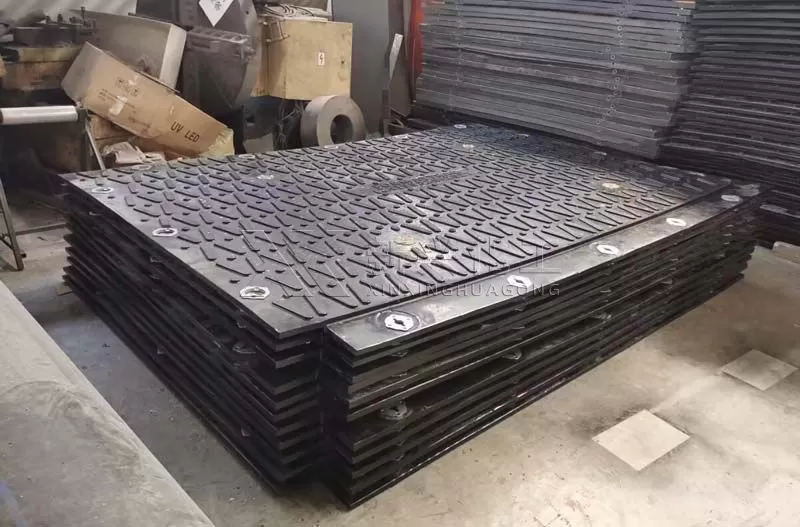
In regions with freezing winters, spring thaw creates one of the most unstable ground conditions of the year. Frozen soil melts unevenly, leading to soft, waterlogged surfaces that cannot support heavy loads.
Ground mats provide:
Load distribution over weakened subgrade
Protection against deep rutting caused by thawing soil
Reduced risk of machine tilting or instability
Safer movement for cranes, excavators, and transport vehicles
This makes them essential for early-season construction resumption.
In monsoon-prone regions, repeated cycles of rainfall and drainage create unpredictable ground strength. Some areas may appear firm on the surface but collapse under load.
Temporary mats improve safety by:
Eliminating hidden soft spots beneath equipment
Reducing slip risks for tracked and wheeled machinery
Providing consistent traction on wet surfaces
Stabilizing work platforms for lifting operations
This is particularly important for crane setup areas and drilling platforms where stability is critical.
Winter conditions often include melting snow, which creates a combination of water and soft soil. This mixture significantly reduces friction and increases the risk of slipping.
Ground mats help by:
Enhancing surface grip for vehicles and personnel
Preventing ice-mud mixture from directly contacting equipment
Reducing braking distance for heavy vehicles
Providing a safer walking surface for workers
In colder climates, mats with textured or anti-slip surfaces are especially valuable.
One of the biggest advantages of temporary ground mats is their ability to stabilize project scheduling across seasons.
Without ground protection:
Work may stop after heavy rain
Equipment relocation becomes difficult or impossible
Recovery time for damaged soil increases costs
With mats in place:
Projects continue through wet weather windows
Mobilization time is reduced after storms
Site transitions remain smooth regardless of weather changes
This improves overall project efficiency and reduces weather-related risk.
Muddy conditions often lead to long-term ground damage if heavy equipment operates directly on soil. Seasonal use of mats helps minimize environmental disturbance.
They contribute by:
Preventing deep rutting and soil compaction
Protecting vegetation root systems
Reducing sediment runoff into surrounding areas
Lowering site restoration requirements after project completion
This is especially important for projects in protected or environmentally sensitive zones.
Mud and moisture accelerate wear on heavy equipment, especially undercarriages, tires, and hydraulic systems.
Temporary ground mats help reduce:
Abrasive soil contact on machinery components
Mud accumulation in moving parts
Slippage-related mechanical stress
Corrosion risks from prolonged wet exposure
Over time, this leads to lower maintenance costs and longer equipment service life.
Seasonal conditions can change rapidly, especially during transitional weather periods. Ground mats offer flexibility in deployment.
Key advantages:
Quick installation before or after rainfall events
Easy relocation to follow changing work zones
Modular expansion for growing site needs
Minimal ground preparation required
This adaptability is crucial for dynamic construction environments.
When soil becomes saturated, even high-powered machines lose efficiency due to wheel slip or track sinking.
Ground mats improve performance by:
Providing a stable working platform
Reducing energy loss caused by sinking resistance
Improving traction and movement control
Allowing heavier loads to be transported safely
This helps maintain productivity even in challenging terrain conditions.
Although ground mats represent an upfront investment, they significantly reduce seasonal operational costs.
They help avoid:
Equipment recovery costs from stuck machinery
Soil remediation and site repair expenses
Weather-related project delays and penalties
Increased labor time due to poor mobility
Over multiple seasonal cycles, the return on investment becomes especially clear.
Muddy conditions are unavoidable in many outdoor projects, but seasonal disruptions do not have to translate into productivity loss. Temporary ground mats provide a practical, reusable solution that stabilizes access, protects equipment, and keeps projects moving regardless of weather conditions.
By integrating ground mats into seasonal planning, contractors can significantly improve safety, reduce downtime, and maintain consistent operational efficiency throughout the year.

Established in 1989,located in Qingdao city of Shandong province, Shandong Ningjin Xinxing Chemical Co.,LTD. is the most professional manufacture of engineering plastics and the only manufacturer who has complete MATS system in China.
Phone
+86 189 0640 6469
Location
Liaohe Road, Ningjin Industrial Zone, Dezhou City, Shandong Province, China.
Copyright © Shandong Ningjin Xinxing Chemical Co., Ltd. All Rights Reserved |
Sitemap
| Powered by