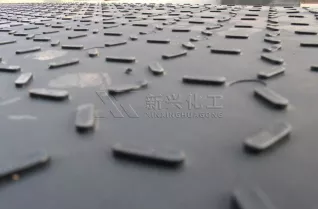
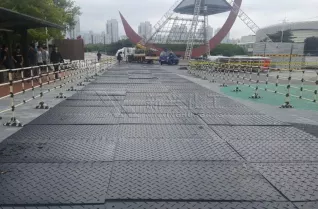
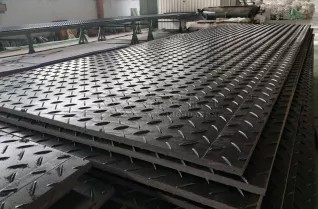
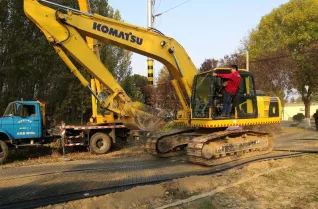
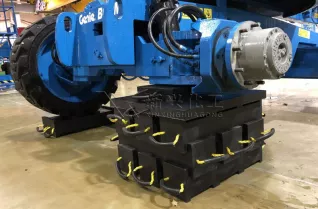
In forestry environments, the core value of road mats lies in minimizing ecological damage while maintaining operational efficiency. Traditional forest road construction often relies on bulldozing or excavation to create dirt roads, a process that permanently destroys surface vegetation, disrupts soil structure, and accelerates erosion. Road mats provide a fundamentally different approach by enabling temporary access without permanent ground damage, making them a key solution for sustainable forestry operations.
Forestry activities frequently take place in ecologically sensitive areas where soil stability, vegetation cover, and water systems must be preserved. Road mats allow heavy equipment to operate in these environments while protecting forest ecosystems and supporting responsible land management practices.
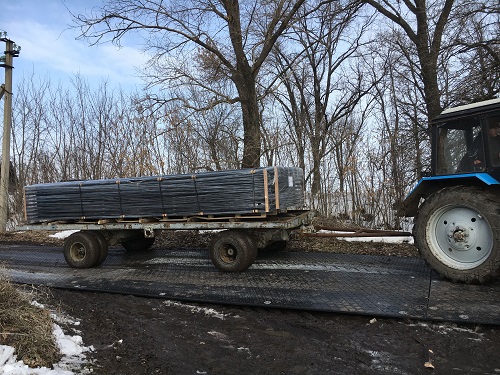
Wood harvesting areas are commonly located in mountainous or hilly regions where the ground is covered with leaf litter, loose humus, and organic debris. These layers are essential for maintaining forest soil fertility and moisture retention. When heavy forestry equipment such as feller bunchers, skidders, and log trucks operates directly on this terrain, it can easily become stuck while simultaneously damaging native vegetation and compressing soil layers, leading to long term erosion and degradation.
Road mats solve these challenges by creating stable, load distributing surfaces that protect the forest floor during harvesting and transport operations. By spreading weight evenly, they reduce ground pressure and prevent deep ruts that would otherwise disrupt natural drainage patterns.
In skidding operations, road mats are commonly installed between harvesting sites and temporary log yards. These modular access routes allow skidders to transport cut timber efficiently while preserving surface vegetation and protecting the humus layer. Maintaining this organic layer is critical for sustaining soil nutrients and supporting post harvest forest regeneration.
In areas without permanent forest roads, road mats can be connected to form temporary branch routes linking log yards to main transportation corridors. This effectively solves the last mile access problem for log trucks while eliminating the need for permanent road construction. After harvesting is completed, the mats can be removed and reused, and the ground surface can be quickly restored through natural revegetation or light rehabilitation measures.
Road mats are especially valuable in harvesting operations near wetlands, streams, and reservoirs. In these sensitive zones, they prevent direct contact between heavy machinery and wetland soils or water edges. This significantly reduces sediment runoff into water bodies, protects aquatic ecosystems, and helps maintain water quality in forest watersheds.
Afforestation and long term forest management require repeated access to areas with loose or undeveloped ground. Newly planted forests, barren hills, and land conversion projects often lack stable access routes, making it difficult for equipment to operate without disturbing young seedlings or exposed soil.
During large scale afforestation projects, road mats can be laid to create temporary access paths for tree planting machinery. These paths allow equipment to move consistently and precisely, improving planting efficiency while preventing damage to newly planted seedlings. As a result, seedling survival rates increase and early stage forest establishment becomes more uniform and successful.
In ongoing forest management activities such as fire prevention patrols, road mats play an important role during high risk seasons. They can be temporarily deployed near firebreaks to support patrol vehicles and firefighting equipment transport. This ensures rapid response capability without compacting soil or damaging forest floor vegetation.
In pest control operations, road mats provide stable platforms for unmanned aerial vehicle takeoff and landing or temporary parking areas for spraying equipment. By limiting vehicle movement to designated mat surfaces, disturbance to surrounding soil and vegetation is minimized, supporting healthier forest ecosystems.
Ecological restoration areas, particularly those affected by wildfires, pests, or severe weather events, are highly vulnerable to further damage. Soil in these zones is often fragile and lacks sufficient vegetation cover, making it prone to erosion and nutrient loss.
Restoration work requires the movement of equipment such as soil improvement machinery, seedling transplanters, and material transport vehicles. Without protection, these operations can worsen soil degradation and slow recovery.
Road mats provide temporary operating platforms and access routes that significantly reduce equipment induced soil disturbance. By preventing direct contact between machinery and fragile ground, they protect newly planted vegetation such as pioneer species and nitrogen fixing plants. This accelerates the recovery process and helps restore ecosystem balance more effectively.
Selecting appropriate road mats is essential to ensure both safety and environmental protection. Load bearing capacity must match operational demands. Forestry applications involving skidders and log trucks typically require heavy duty road mats capable of supporting loads between twenty and fifty tons, while lighter agricultural equipment may only require mats rated for ten to twenty tons.
Ground conditions also influence selection. Muddy or wetland environments benefit from mats with enhanced anti slip textures and edge drainage designs, while mountainous or sloped terrain requires mats with secure locking systems to prevent movement during use.
Environmental performance is increasingly important in forestry operations. Road mats manufactured from recyclable high density polyethylene or environmentally friendly composite materials help reduce plastic pollution risks and align with sustainable forestry certification standards.
As global policies increasingly emphasize ecological agriculture and sustainable forestry, road mats are transitioning from emergency solutions to standardized operational equipment. In Europe and North America, road mats have already been integrated into best practice frameworks for commercial forestry and conservation projects.
In China and other rapidly developing forestry markets, road mats are being promoted in national reserve forest programs and ecological restoration initiatives. Looking ahead, intelligent road mats equipped with embedded sensors are expected to play a larger role. These smart systems can monitor load pressure and usage conditions in real time, improving operational safety while providing data to support precision forest management.
Road mats are becoming an indispensable tool in modern forestry operations. By enabling temporary access without permanent damage, they protect forest soil, vegetation, and water systems while ensuring efficient timber harvesting, afforestation, and restoration activities. As sustainable forestry continues to evolve, road mats will remain a critical component of responsible and environmentally conscious forest management worldwide.

Established in 1989,located in Qingdao city of Shandong province, Shandong Ningjin Xinxing Chemical Co.,LTD. is the most professional manufacture of engineering plastics and the only manufacturer who has complete MATS system in China.
Phone
+86 189 0640 6469
Location
Liaohe Road, Ningjin Industrial Zone, Dezhou City, Shandong Province, China.
Copyright © Shandong Ningjin Xinxing Chemical Co., Ltd. All Rights Reserved |
Sitemap
| Powered by