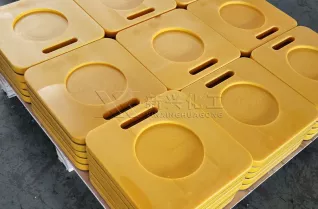
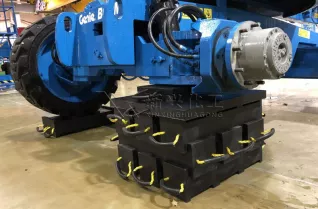
Mobile road coverage mats are widely used to create temporary access roads and stable working surfaces in environments where permanent roads are not practical. They are essential products for construction sites, infrastructure projects, outdoor events, energy installations, and emergency operations.
Mobile road coverage mats are modular panels made from high-strength materials that are laid directly on soft, uneven, or sensitive ground. Their main function is to distribute weight evenly and prevent damage to the surface below, while allowing vehicles and heavy equipment to move safely.
They are designed to be:
Portable and reusable
Easy to install without foundations
Suitable for short-term or long-term projects
Compared with traditional gravel or steel plate roads, mobile mats are faster to deploy and far more environmentally friendly.
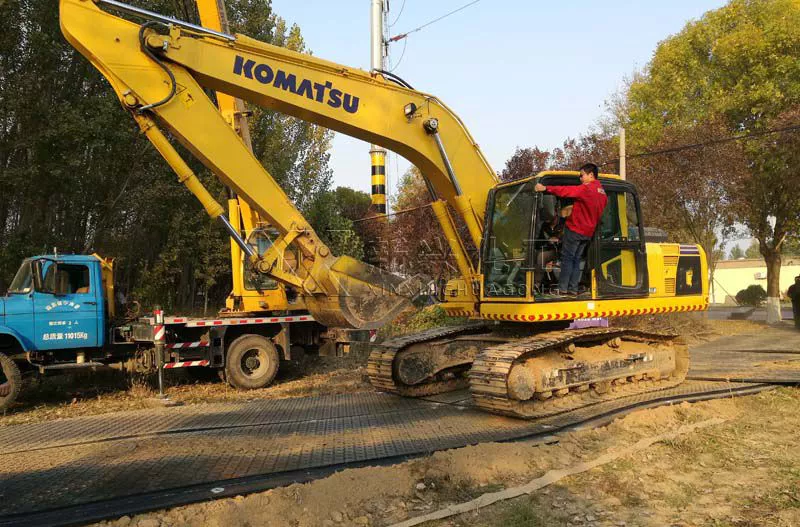
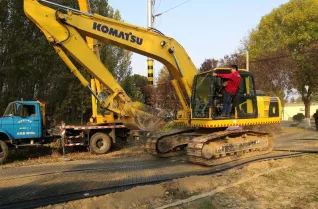
In construction and civil engineering, mobile road coverage mats are used to create temporary access routes for cranes, trucks, concrete mixers, and excavators. They prevent machinery from sinking into mud and help maintain site efficiency during rainy seasons or on weak soil.
In the energy sector, especially oil and gas, wind farms, and solar projects, these mats provide safe access to remote locations. They reduce environmental impact and comply with strict land protection requirements.
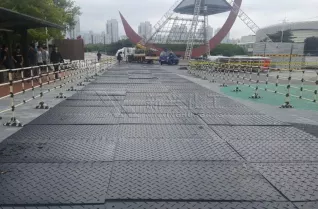
For outdoor events and exhibitions, they are commonly used to protect grass, parks, and sports fields from vehicle damage while creating temporary parking areas and walkways.
In emergency and military operations, mobile road mats enable rapid deployment in disaster zones, flooded areas, or unstable terrain where conventional roads are unavailable.
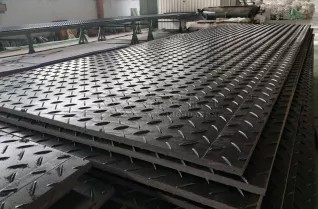
HDPE road mats are the most popular type in the global market. High-density polyethylene offers an excellent balance between strength and weight. These mats are resistant to water, UV radiation, chemicals, and corrosion, making them suitable for harsh outdoor environments.
Composite road mats are designed for extremely heavy loads. They are reinforced with fiberglass or other high-strength materials and are often used in oil fields and heavy industrial applications.
Timber road mats are a traditional option, mainly used in forestry and rural construction. While they have lower initial cost, they are heavier, harder to maintain, and have a shorter service life compared to plastic alternatives.
One of the biggest advantages is ground protection. These mats prevent soil compaction, erosion, and permanent surface damage, which is critical for environmentally sensitive areas.
Safety is another major benefit. By creating a stable and anti-slip surface, they reduce the risk of accidents caused by sinking vehicles or unstable ground.
From a cost perspective, mobile road mats are highly economical over time. Because they are reusable, companies can use them across multiple projects, significantly lowering long-term infrastructure expenses.
Their fast installation also saves labor and time. Most mats can be deployed manually or with light machinery, without the need for professional road construction.
Mobile road coverage mats function by spreading vehicle weight across a wider surface area. This reduces pressure on the ground and prevents localized sinking.
Interlocking designs further improve stability, ensuring that mats stay in place even under frequent traffic or heavy loads. Some designs include textured surfaces for better traction and drainage channels to prevent water accumulation.
Load capacity is the first factor to consider. Buyers must evaluate the maximum weight of vehicles and machinery that will pass over the mats.
Material selection depends on the environment. For wet, chemical, or high-temperature conditions, HDPE or composite mats are usually preferred.
Thickness and size also affect performance. Thicker mats provide better load distribution, while larger mats reduce installation time.
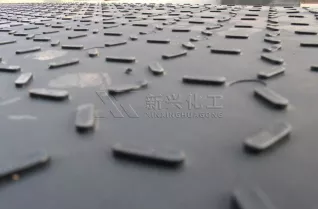
Surface design is important for safety. Anti-slip patterns, grip textures, and drainage structures can significantly improve usability in real working conditions.
With proper care, mobile road coverage mats can last many years. Regular cleaning removes mud and debris that may affect grip. Proper stacking and storage prevent warping and deformation.
Unlike timber or steel solutions, plastic mats require minimal maintenance and do not rust, rot, or absorb moisture.
As industries move toward more sustainable and flexible construction methods, mobile road coverage mats are becoming standard equipment rather than optional accessories.
They help companies reduce environmental impact, improve operational efficiency, and maintain safety standards across diverse working conditions.
For contractors and developers, investing in high-quality mobile road coverage mats means fewer delays, lower ground restoration costs, and better project control.
In modern infrastructure projects, mobile road coverage mats are not just temporary tools — they are strategic assets for efficient and sustainable operations.

Established in 1989,located in Qingdao city of Shandong province, Shandong Ningjin Xinxing Chemical Co.,LTD. is the most professional manufacture of engineering plastics and the only manufacturer who has complete MATS system in China.
Phone
+86 189 0640 6469
Location
Liaohe Road, Ningjin Industrial Zone, Dezhou City, Shandong Province, China.
Copyright © Shandong Ningjin Xinxing Chemical Co., Ltd. All Rights Reserved |
Sitemap
| Powered by